You walk past your own shop more than anyone else. If your window does not make you want to walk in, it is probably not doing much for anyone else either.
If you have been meaning to do something with the front window, these window signage ideas are about getting people through the door, not just filling the glass.
What makes a good window sign?
Plenty of shop windows look busy. Not many are doing their job. Good window signage does three things: it tells people what you do, gives them a reason to stop and makes the next step obvious. If the glass looks pretty but does none of those, it is decoration rather than marketing.

Before you plan anything, answer three questions. What do I want people to know at a glance? What should they do next? Who am I trying to attract? Once that is clear, the design decisions get much easier.
Say what you do in one clear line
It is surprising how many shops bury the basics. Skip vague lines like “Quality solutions for everyone” and be direct: “Custom uniforms for local teams”, “Fresh flowers, every day” or “Phone repairs while you wait”. People walking or driving past scan rather than read, so a quick, specific line that matches what they are already looking for does the work.
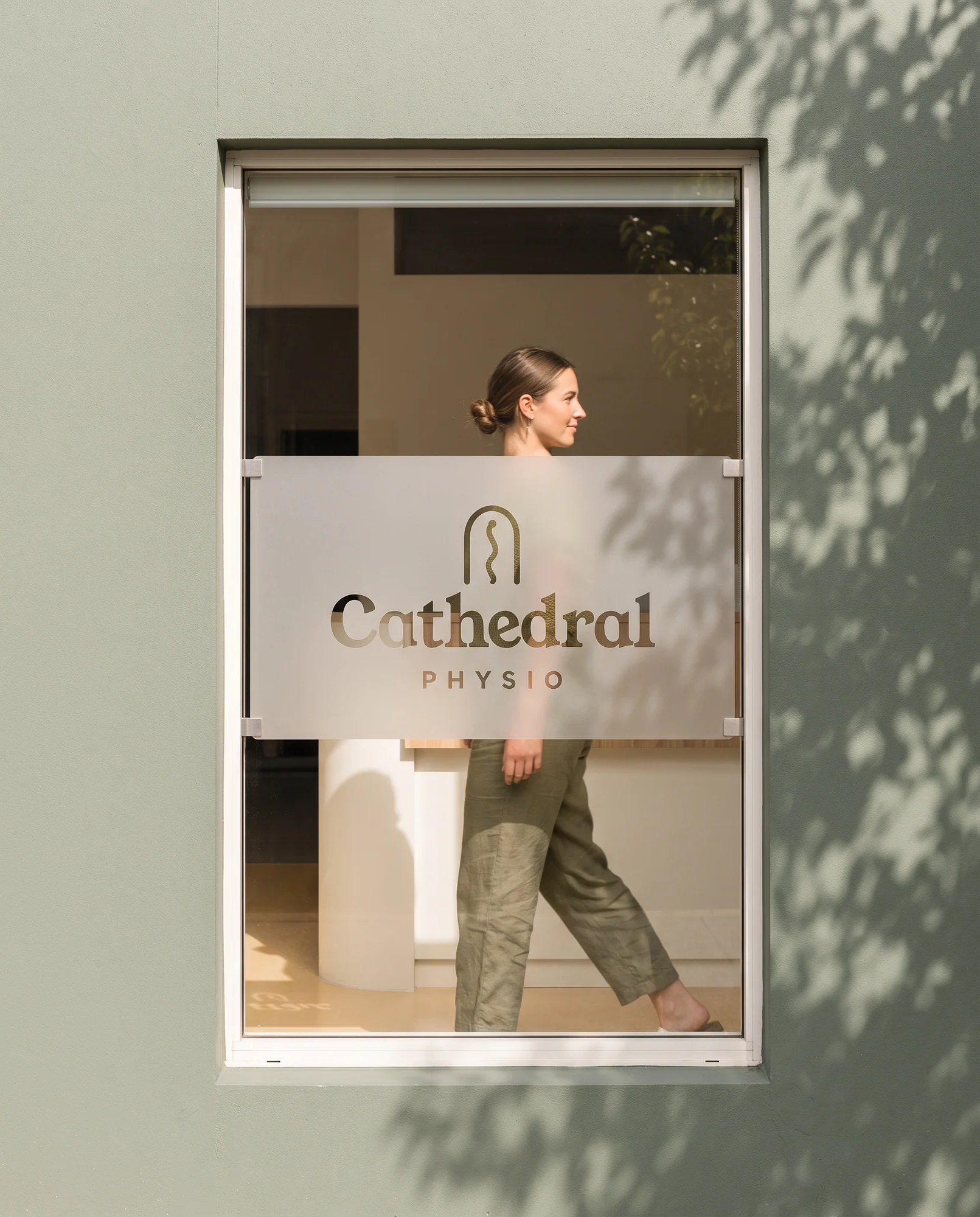
Keep it to one strong line, big enough to read from across the street. That is your hook. Everything else is extra. Clean cut vinyl window lettering suits this well: just your words sitting on the glass, with no background or border.
How big should your window lettering be?
Enter how far away people read your window to see the letter height you need.
Make one offer the hero
If your window is crammed with posters, stickers and handwritten specials, nothing stands out. Pick one main offer, such as mid-week lunch specials, a loyalty reward or new season stock, and build the window around it:
a big, clear headline
a short supporting line if you need one
a simple call to action like “Come in and ask us” or “Scan for the menu”
Rotating one strong offer each month or season usually beats a noisy window full of unrelated messages. An advertising poster inside the glass is an easy way to swap the hero offer without touching anything else.
Quick tip: if your offer changes often, keep the permanent details (name, hours, contact) on long-life vinyl and put the rotating offer on a poster or a separate decal you can swap without redoing the whole window.
Answer common questions on the glass
Your window can quietly answer what people are wondering before they walk in. Short lines work well: “Open Saturdays”, “Walk-ins welcome”, “Gift wrapping available” or “Custom orders welcome”. Place them as smaller decals around the main message. Done well, the window feels helpful rather than shouty, and it becomes easier for people to say yes.
Keep window signage simple and readable
Even the best ideas fall over on the basics.
Too much text. If it reads like a flyer, it is wrong for glass. Short and bold wins.
Weak contrast. Pale vinyl over a busy interior is hard to read. Aim for strong light on dark or dark on light.
Too many fonts. Stick to one or two so the shopfront feels calm and confident.
Night-time. If your street is dark, check the signage still reads when your interior lights are on.
For privacy panels or a softer look, frosted vinyl gives the feel of etched glass and removes cleanly when you want a change. Cut vinyl lettering covers when lettering beats a printed sticker.
Make it easy to contact you after hours
Plenty of people see your window when you are closed. Make sure they can still act on it. At minimum, show your website or booking link, a phone number and any social handle you actually use. A clean strip along the bottom or opening hours decals near the door is often enough.
If you use a QR code, label it clearly, like “Scan for menu” or “Scan to book”, and test it from outside with a real phone. That way the window keeps working when the door is locked.
A simple way to plan your window
Pick your main goal.
Write one clear message that supports it.
Add one or two short lines that explain the benefit or answer a common question.
Include the basics: contact details, opening hours or a QR code.
Sketch it roughly on paper to see how it fits together.
Then measure each pane of glass, width and height inside the frame, and note which side you want the decal on. Send us those sizes with a photo taken from the footpath. We set the layout and send a scaled proof so you can see exactly how it sits before anything is made. Window decals are straightforward to put up yourself with a squeegee and a bit of patience, or you can hand them to an installer you choose.
Before you order: measure every pane separately, even if they look the same. Old shopfront frames are rarely identical, and a few millimetres matters on glass.
For more on the whole frontage, read simple ways to make a shopfront look more inviting and our Bendigo sign ideas that get noticed. When you are ready, window lettering is priced live on the window lettering page: enter your pane sizes and upload your artwork or ask us to design it. You can also browse all signs and banners, or send us a few photos of your window and we will help you plan it.