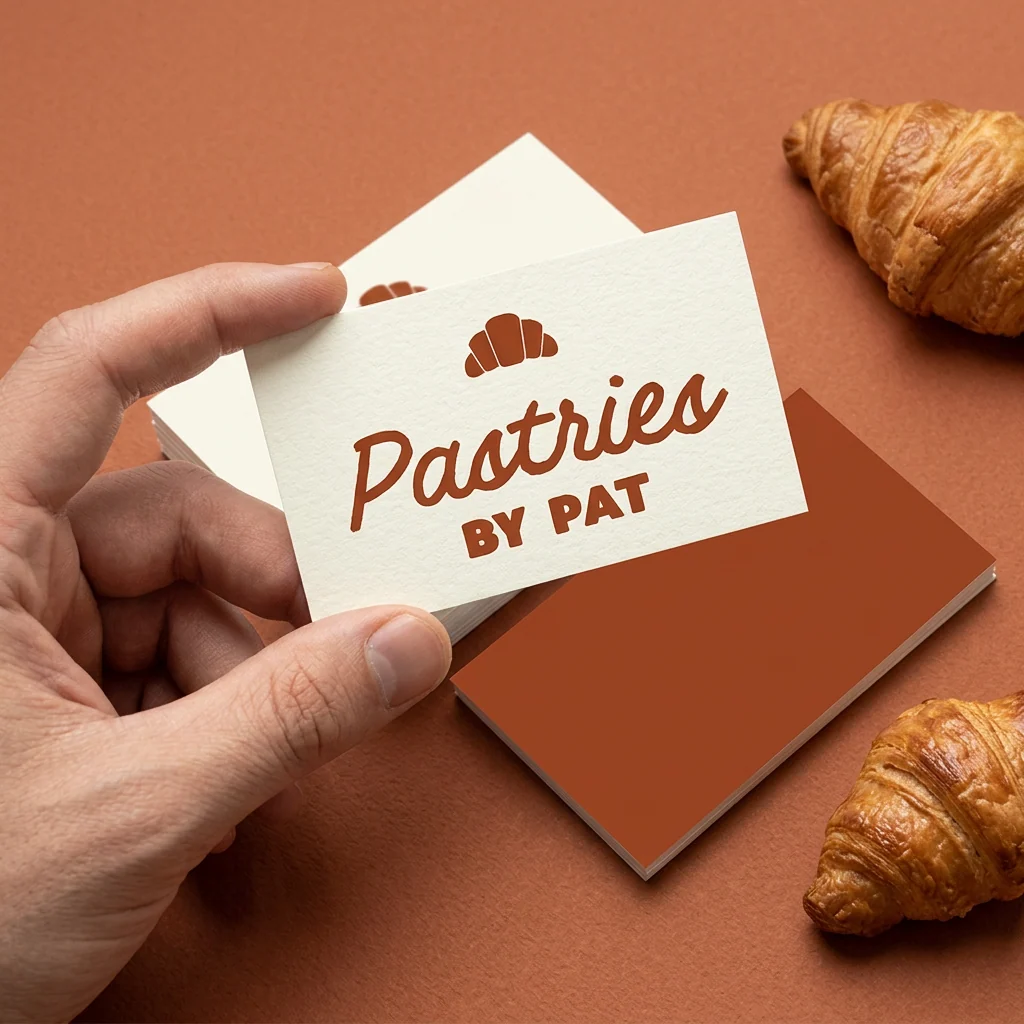
In a world of texted phone numbers and Instagram handles, it is fair to ask whether a tradie still needs a physical card. The short answer is yes, but not for the reason you might think.
Business cards for tradies are not really a sales tool. Their job is to make sure people can find you again months later, when the tap starts leaking or the switchboard needs work. Here is why they still earn a spot in the glovebox.
Cards are harder to lose than texts
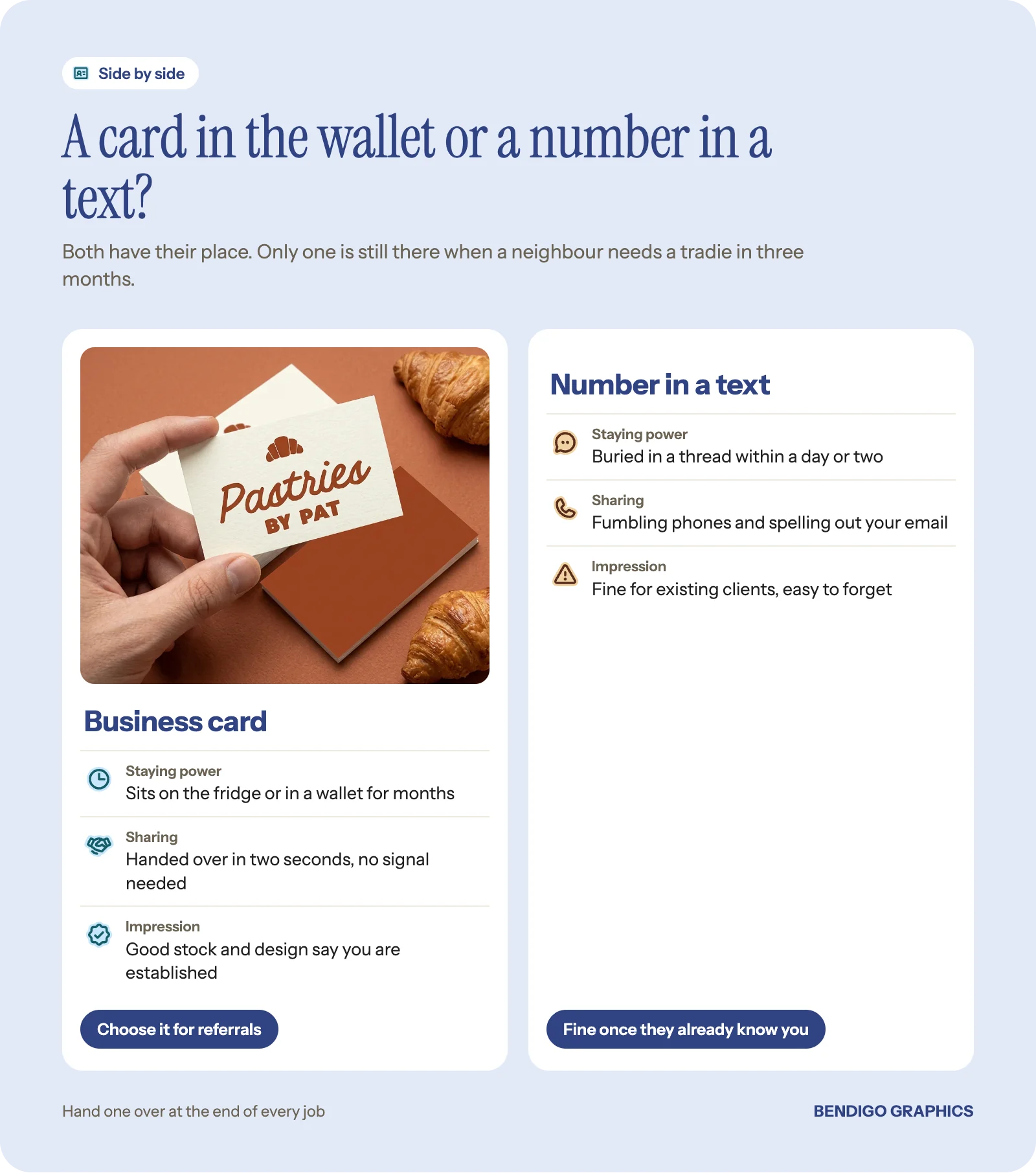
A number sent by text gets buried in a thread within a day. A business card sits in a wallet, on a fridge, on a desk or pinned to a noticeboard. When someone needs a plumber in three months, they are not scrolling back through old messages. They are looking at the card that has been sitting next to the kettle.
Physical things stay around in a way digital messages do not. That is not nostalgia, it is just how people keep track of the tradies they liked.
They work when technology does not
You are on a job and the neighbour leans over the fence to ask if you do their kind of work. You can fumble with phones, try to share a contact, or spell out your email while they type it into their notes. Or you can hand them a card. Done in two seconds, no signal needed, no asking how to spell your surname.
Cards work at barbecues, at the footy, at the hardware store, at the pub and anywhere else people ask what you do for a living. Having one ready makes you look like someone who does this for real.
A good card makes a trade business look established
This matters more than most tradies admit. A well-made card on solid stock tells people you are established, professional and invested in the business. It is a credibility signal, especially for newer operators still building a referral network.
A flimsy card on thin stock does the opposite. It says printed at home, or not fussed about details. If you are going to have cards, spend a little more on decent stock and a proper design. A box of good cards lasts most tradies a long while, so the difference per card is small. Thick 400gsm cards feel noticeably more solid in the hand. More ways to lift the whole business are in how to make a trade business look more established fast.
Before you order: the price comes down to the stock, the finish, one or two printed sides and the quantity. Pick those on the product page and you will see the live price straight away.
What should go on a tradie's business card?
Keep it simple:
your name
your trade, in plain words
your phone number and email
your ABN
your website or an Instagram you actually keep up
your logo, if you have one
That is it. Do not list every service you offer, add a paragraph about your experience or cram both sides with information. A clean card with clear contact details does the job. Everything else is clutter. The same thinking applies to your ute, which is covered in what needs to go on trade signage.
Quick tip: if your business name does not say what you do, add your trade in plain words under it. "Plumbing and gas" beats a clever name on its own every time.
Business cards for tradies: how to actually use them
Keep a stack in the glovebox, a few in your wallet and some in the tool bag.
Hand one to every new client at the end of a job and say, "If you know anyone who needs similar work, pass this on."
Leave one with the neighbour who watched you work.
Pin a couple on the community noticeboard at the local hardware store if it has one.
Staple one to every quote or invoice you hand over.
The card's job is not to sell. It is to make sure people can find you again when they need you. Simple, physical, reliable.
Make the card and the ute tell the same story
Your card works hardest when it matches everything else people see: the name on the ute, the shirt and the paperwork. A set of magnetic car signs means the neighbour over the fence sees the same name twice, once on your vehicle and once in their hand. Matching quote and invoice pads finish the job. Our guide to magnetic signs vs vinyl decals helps you choose for the vehicle.
Common questions
Are digital business cards enough for tradies?
They are handy for people who already have your number, but they rely on both phones cooperating. A printed card works every time and stays in the house long after the job is done.
Should I put a QR code on my card?
Only if it goes somewhere useful, like your reviews or a quote form, and you test it first. Your phone number should still be the biggest thing on the card.
How many business cards should a tradie order?
Enough to hand them out freely without rationing. If any details might change soon, such as a new number or business name, order a smaller run first.
Can you design my cards if I do not have a logo?
Yes. We can set your name and trade in a clean layout now, or design a logo you can use on the ute and shirts too.
Sort your cards in one go: business cards are priced live on their page, and you can upload your logo or ask us to design them. The rest of the paperwork range is under print advertising.