Social media reach comes and goes with every algorithm change. An email list is different: it belongs to you, and the people on it asked to hear from you. That is why email marketing for small business is still one of the most dependable ways to bring customers back, and one of the easiest to start small.
You do not need a big list or a designer to begin. You need permission, a simple tool and something worth saying.
Why does email marketing suit a small business?
You own the list. If a platform changes its rules, your customers' addresses are still yours.
People chose to be there. Subscribers have already shown interest, so a good email lands with a warm audience.
It is quick to act on. One tap from an email takes someone to a booking page, an offer or a product.
It suits a local business. A regular note from a business people know and visit reads more like a letter than an ad.
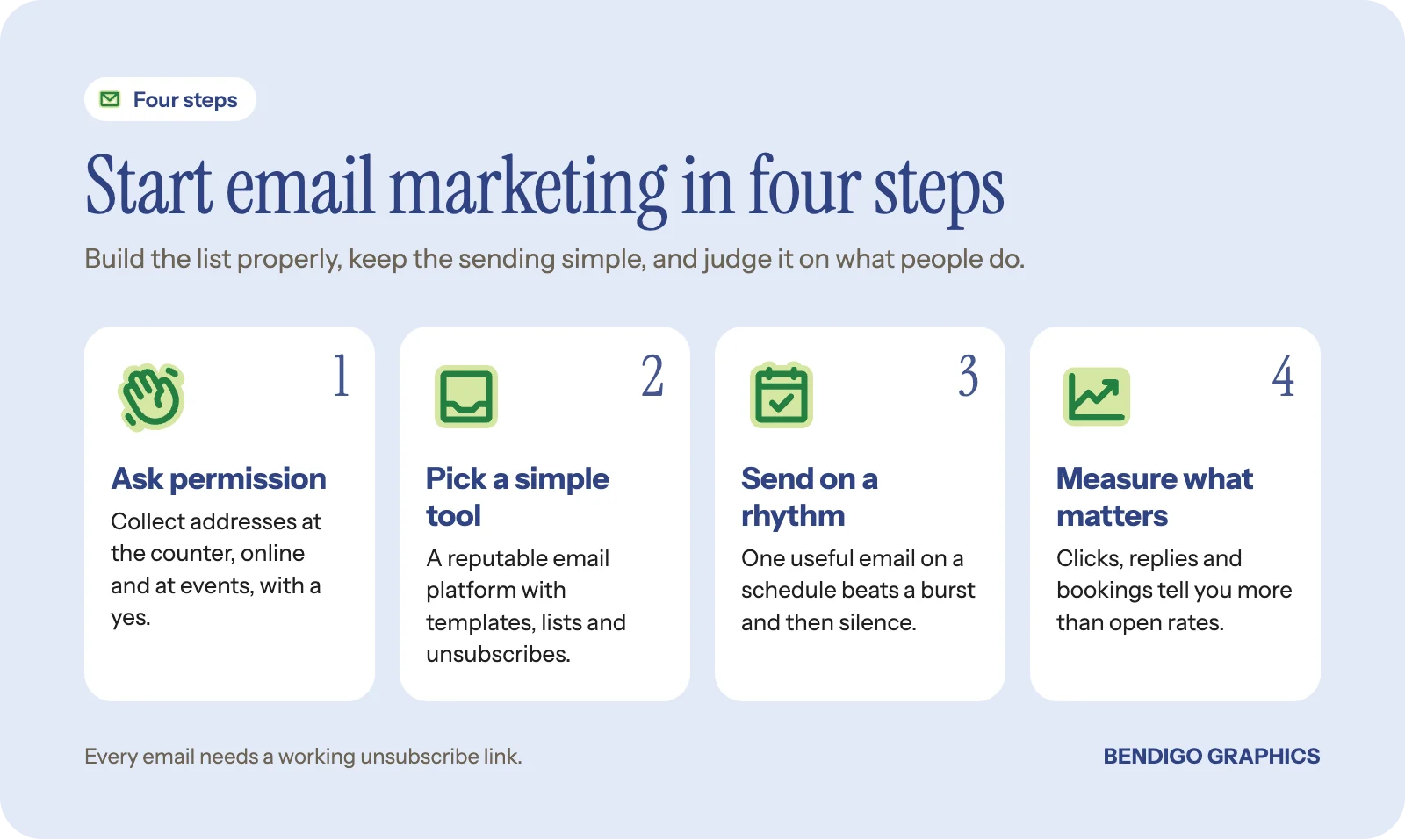
Start with permission
In Australia, the Spam Act 2003 sets the ground rules for commercial email. In short, you need consent to send, every email has to say clearly who it is from, and every email needs a working way to unsubscribe. The simplest way to stay on the right side of it is to ask people directly and keep a note of when and how they said yes.
Good places to ask:
At the counter, when someone buys or books.
On your website, with a short sign-up form that says what they will get.
At events and markets, with a sign-up sheet or a QR code on the table.
On printed material. A postcard in the bag or a loyalty card with a QR code to your sign-up page brings in addresses every day.
Rule of thumb: tell people what they are signing up for, such as "a monthly note with new stock and member offers", and then send exactly that.
Choose a simple tool
Do not send marketing email from your normal inbox. A reputable email platform gives you templates, handles unsubscribes automatically, keeps your list tidy and shows you what happened after each send. Start with the basics and add features only when you need them.
If your website does not yet have a sign-up form, it is worth adding. Our small business website checklist covers it along with the other essentials.
What should a small business send?
The best emails are useful first and promotional second. Some ideas that work for local businesses:
A welcome email that goes out when someone joins, saying thanks and what to expect.
A regular newsletter with what is new, what is coming up and one clear offer or invitation.
Seasonal reminders around your busy times, such as spring, Christmas trading or the new school year.
Service reminders for businesses with a natural cycle, like servicing, check-ups or reorders.
Event invitations for launches, open days and workshops.
How often should you send?
Pick a rhythm you can keep. For many small businesses that is monthly, with an extra email around a big event or season. Consistency matters more than frequency: a list that hears from you regularly remembers who you are, while a list that hears nothing for a year tends to forget it ever signed up.
If you are also posting on social media, the two can share material. Our guide to what to outsource in social media and what to keep explains how to split that work.
How to write an email people read
A plain subject line. Say what is inside. Clever lines get skipped.
One main message. One offer, one event or one piece of news, with one button.
Written for a phone. Short paragraphs, big buttons and images that are not essential to the message.
From a person. Sign it with a name. People reply to people.
What numbers show it is working?
Open rates used to be the headline figure, but some email apps now open messages automatically for privacy reasons, so opens can look better than they are. Pay more attention to what people do:
Clicks on the main button.
Replies and phone calls that mention the email.
Bookings and sales in the days after a send.
Unsubscribes, which tell you when the content or the frequency is off.
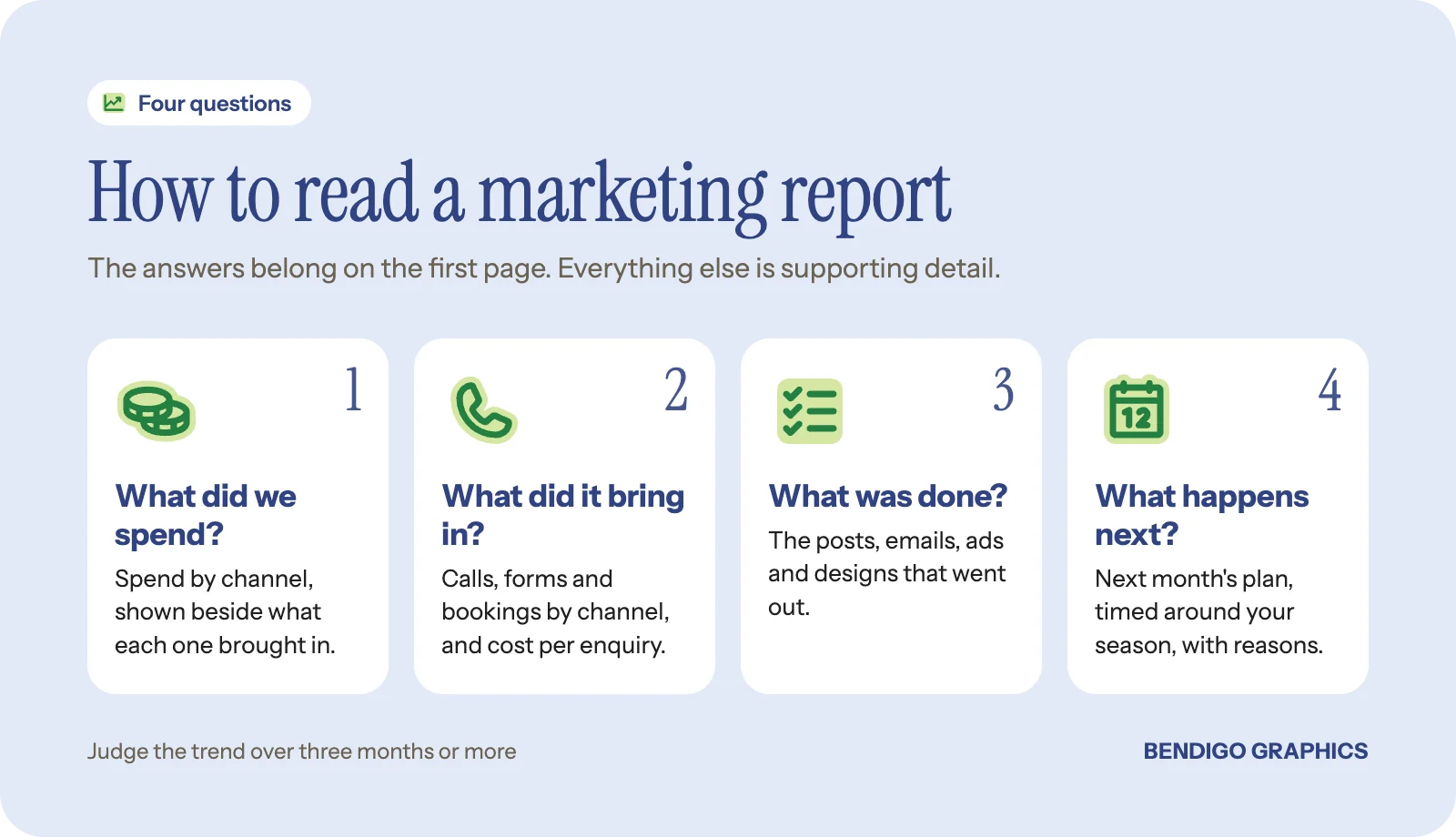
Those belong in your monthly marketing report, next to what the rest of your marketing did.
Quick tip: send a test to yourself and read it on your phone before every send. Most mistakes are obvious on a small screen.
Common questions
Is email marketing worth it for a small business?
Usually, yes. It costs little to run, the list is yours, and it reaches people who have already chosen to hear from you.
Can I add my customers to my list without asking?
The safest approach is to ask. The Spam Act 2003 requires consent, and a clear yes also gives you a more engaged list. The Australian Communications and Media Authority publishes guidance if you are unsure.
How long should a marketing email be?
Short enough to read on a phone in under a minute. One message and one button is a good rule.
Do I need a designer for email?
Not to start. A clean template with your logo and brand colours is enough. Design help is worth it once you are sending regularly and want every email to look like the rest of your brand.
If you would rather hand the planning, writing and sending to someone else, see how our email marketing service works.