Most business owners know they should be posting. The hard part is finding the time, week after week, when the real work is serving customers. Social media management for a small business is really a bundle of smaller jobs, and some of them are best handed to someone else while others only you can do.
Splitting it properly is what keeps your pages active in a busy month and still sounding like you.
What does social media management for a small business involve?
When people say "doing social media", they usually mean all of these:
Planning: deciding what to post and when, around your seasons, events and offers.
Making content: photos, short videos and designed graphics.
Writing: captions, hashtags where they help, and the call to action.
Posting: scheduling at sensible times on each platform.
Community: replying to comments and messages.
Ads: paid Facebook and Instagram campaigns, if you run them.
Reporting: knowing what worked, so next month is better.
Seen that way, it is easier to decide who does what.
What to outsource
Hand over the jobs that need consistency and craft more than inside knowledge.
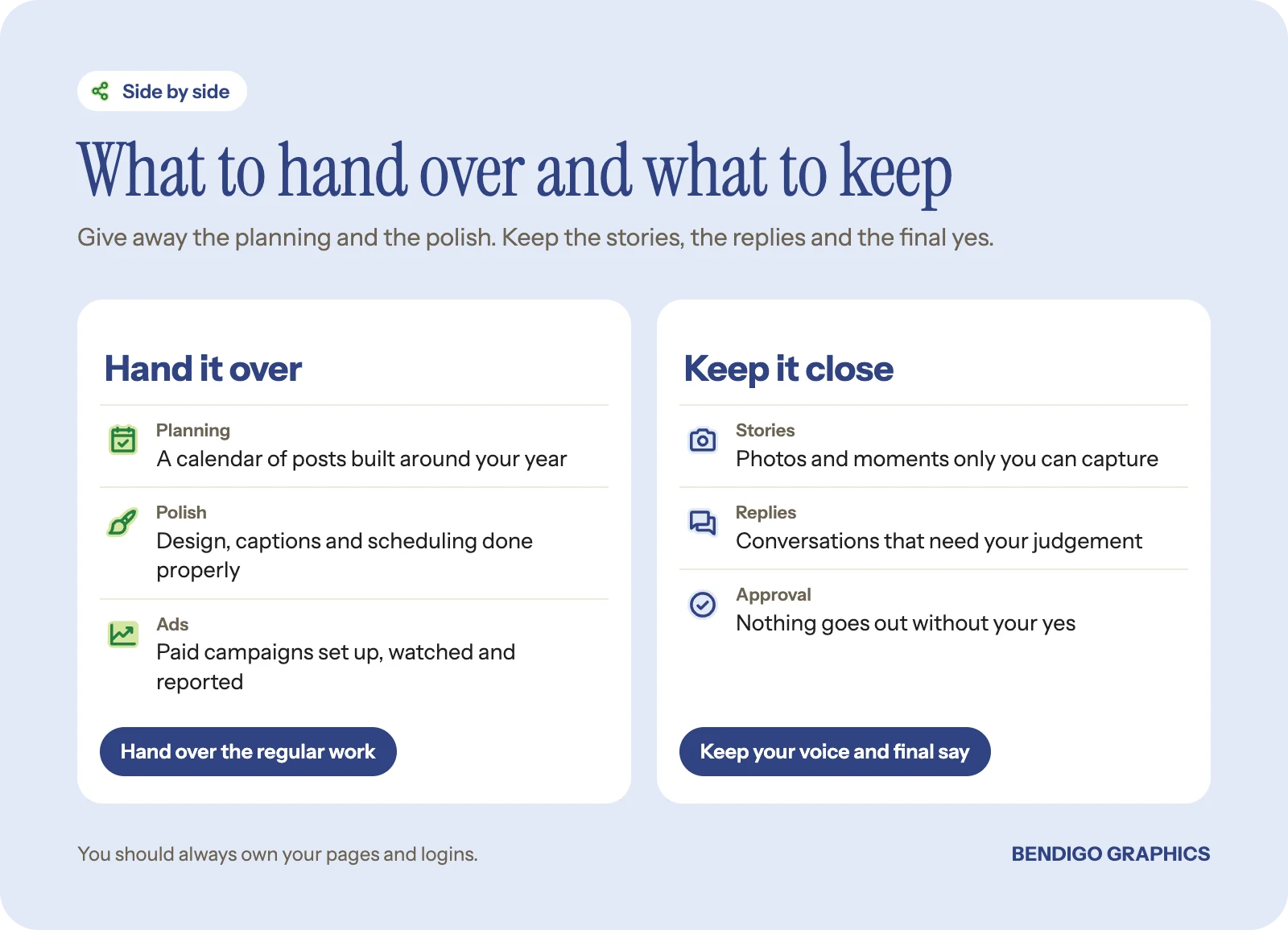
The plan. A content calendar built around your year, such as school holidays, the Bendigo Cup, Christmas trading and your own quiet months, means you never start a week wondering what to post.
Design and captions. Graphics that match your brand every time make a page look established. Well-written captions do the same for your voice.
Scheduling. Posts go out on time even when you are flat out.
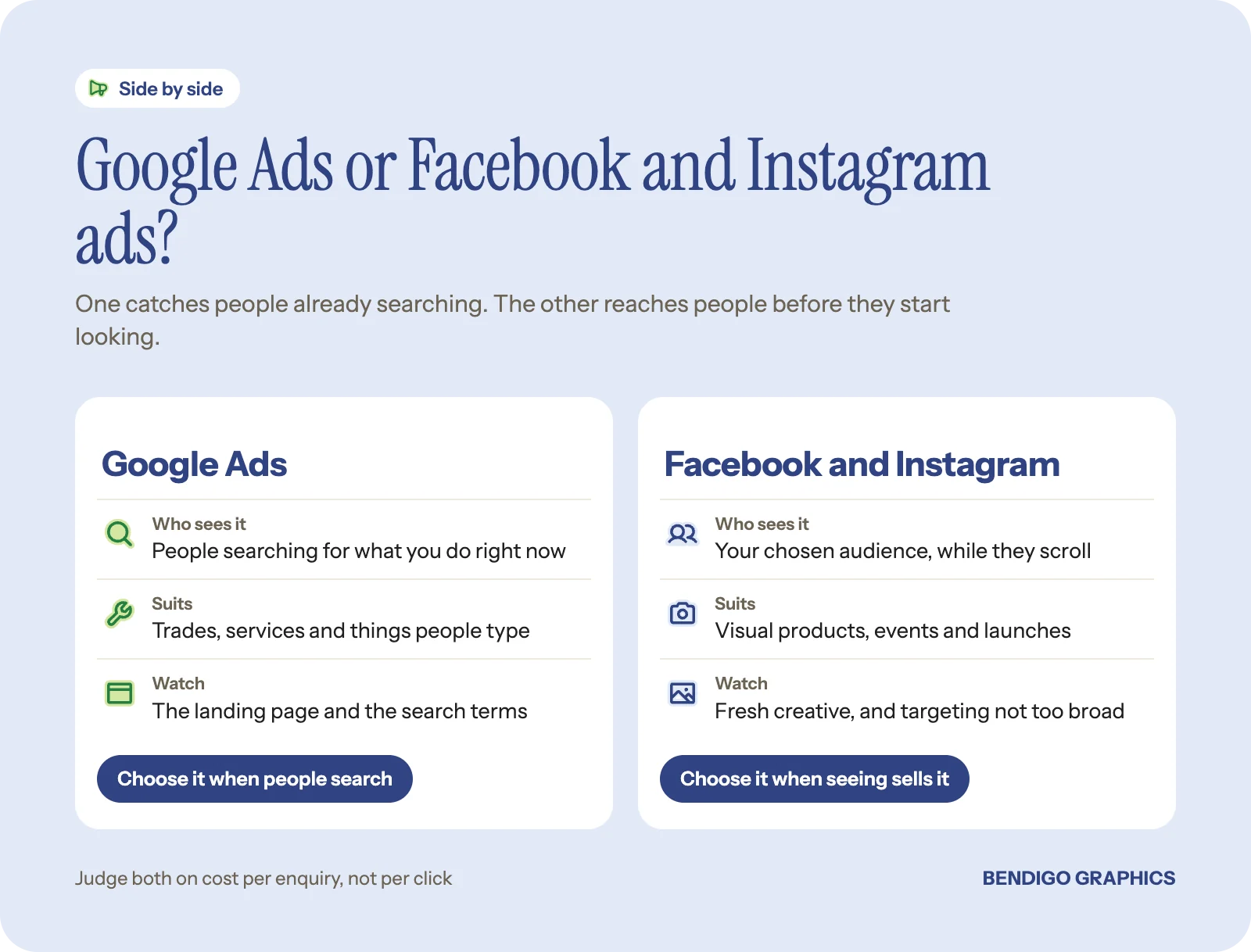
Paid ads. Facebook and Instagram ads reward careful setup and regular checking. Our comparison of Google Ads and Facebook ads explains where each fits.
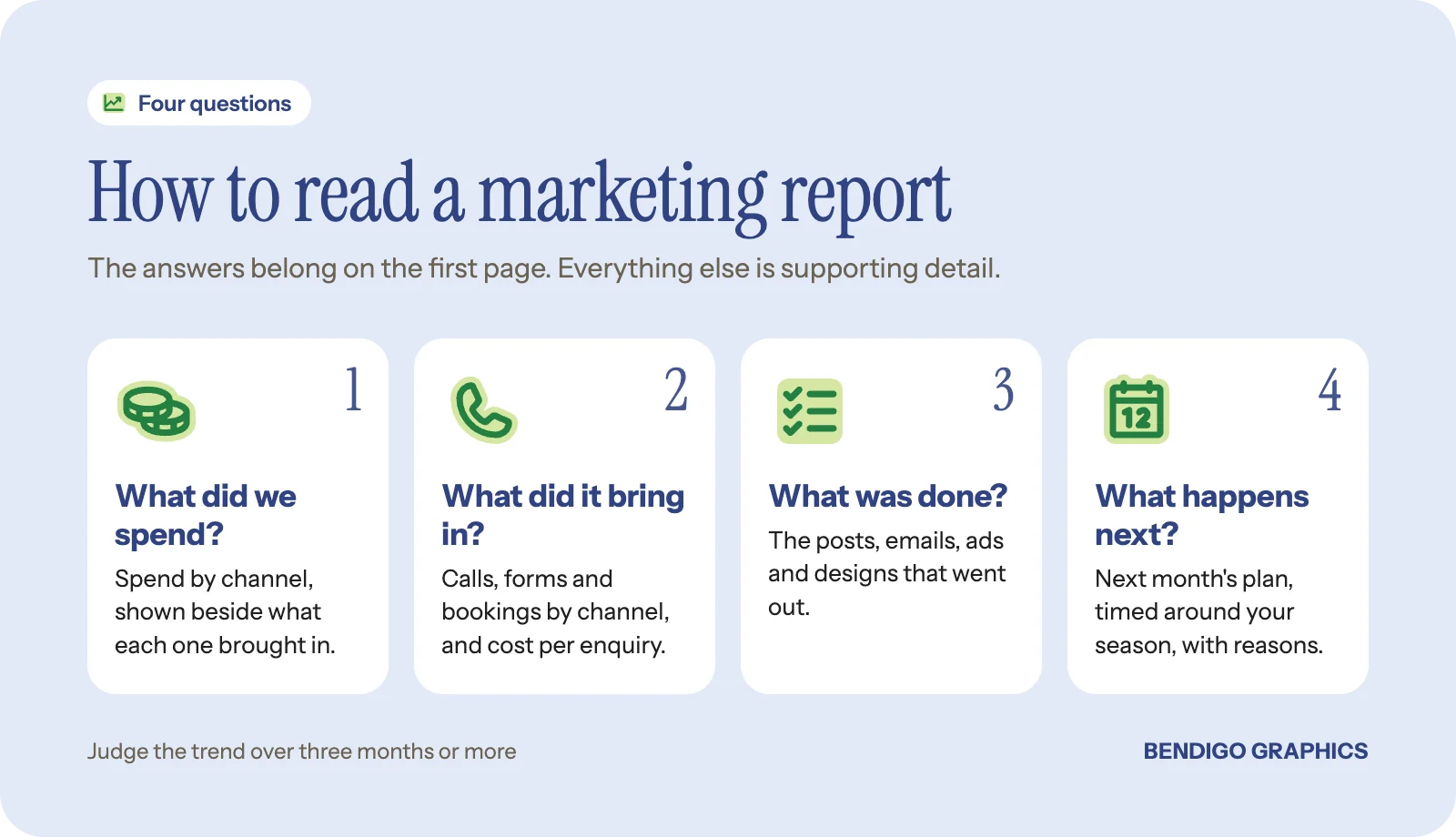
Reporting. Someone should tell you, in plain English, what the posts and ads actually did.
What to keep
Some things lose their value the moment they are handed over.
Your stories. The new stock arriving, the job that went well, the team member celebrating ten years. Only you see these, so take the photo on your phone and send it on.
Replies that need judgement. A complaint, a quote request or a regular asking after someone. Routine thanks can be shared, but the real conversations should come from you.
The final say. Nothing should go out in your business's name without you agreeing to it.
Rule of thumb: outsource the work that needs to happen every week. Keep the work that needs you to have been there.
The shared middle: photos and approvals
The best arrangements are a partnership. You send the raw material, a few phone photos or a quick voice note about what happened this week, and it comes back as a finished post. For bigger moments, such as a new shop, a new menu or a team photo, a planned content shoot gives you a bank of good images to draw on for months.
Approvals should be quick. With our approvals in Pulse, the posts we prepare arrive ready to approve or send back from your phone, and nothing goes out without a yes.
How often should a small business post?
There is no magic number. A steady rhythm you can keep up beats a burst of daily posts followed by two silent months. Pick a pace that suits your business, stick to it, and put your effort into posts that are genuinely local and genuinely yours. A photo of your team at a Bendigo event, or a finished job in a street people recognise, will usually do more than a generic graphic about a national day.
You also do not need to be everywhere. Most local businesses do well by doing Facebook and Instagram properly before adding anything else.
Signs it is time to hand it over
Posting stops whenever you get busy, which is exactly when you have the most to show.
Every post looks different, and the page does not look like your shopfront or your van.
You boost posts now and then without knowing whether it did anything.
Messages sit unanswered because nobody is sure whose job they are.
What to ask before you outsource
Whoever you choose, whether an agency, a freelancer or a staff member, ask the same questions. Who owns the pages and the logins? (You should.) How do approvals work? Is ad spend paid to Meta directly, so you can see it? What does the monthly report show? Our guides to choosing an agency, a freelancer or a staff member and what a marketing report should tell you go further.
Good to know: your printed material can do some of the work. Put your Instagram handle on your window with some simple window lettering and on the postcards that go out with every order.
Common questions
Should a small business outsource social media?
Outsource the regular, skilled parts, like planning, design, scheduling and ads. Keep the stories, the important replies and the final approval.
Who should reply to comments and messages?
You, for anything that needs a decision or a personal touch. Simple thanks and common questions can be handled by whoever manages the page, as long as you have agreed how.
Do I need to be on every platform?
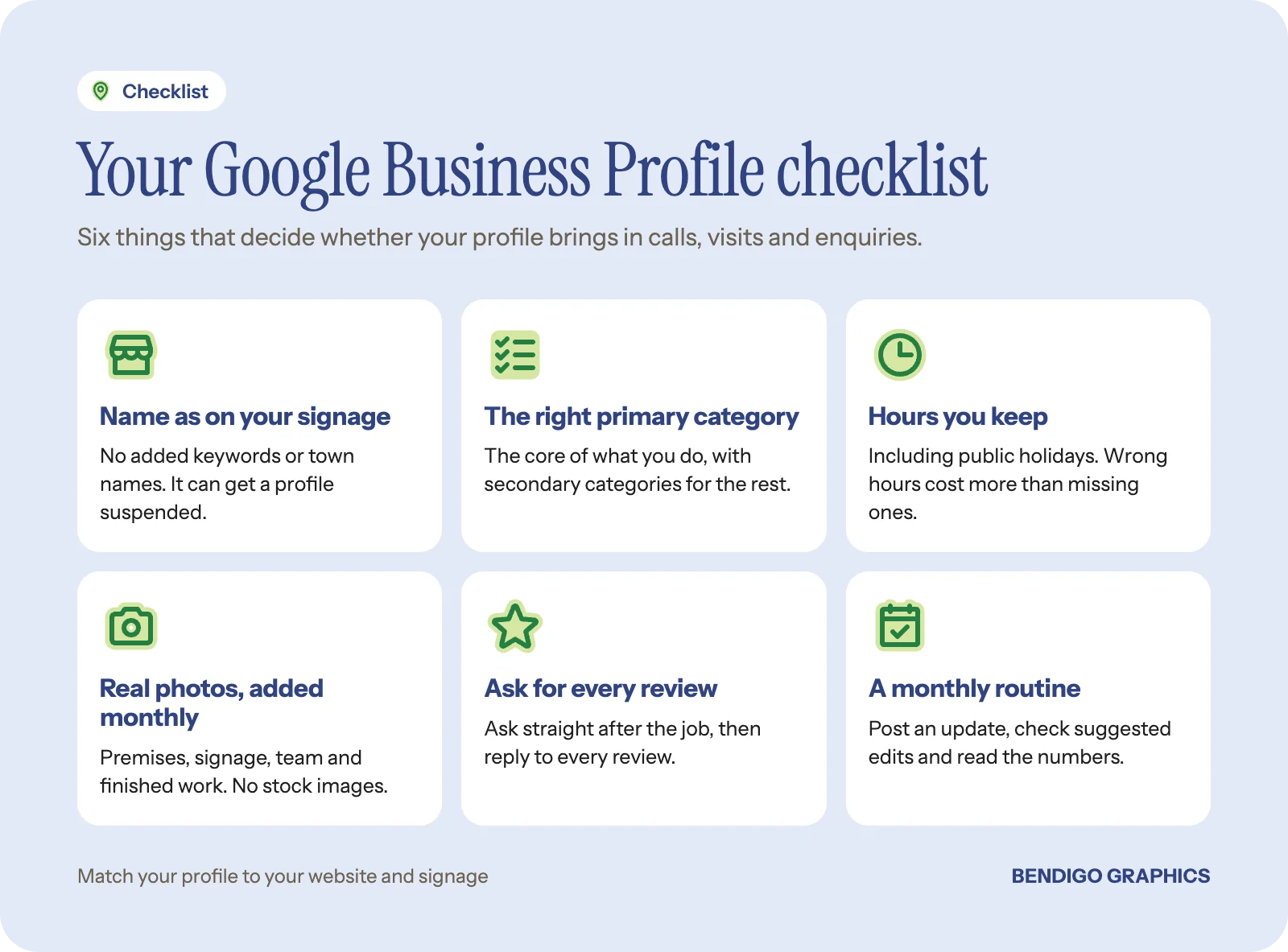
No. Do one or two well. For most local businesses that means Facebook and Instagram, plus an up to date Google Business Profile.
Will outsourced posts still sound like my business?
They should, if you keep sending your own photos and stories and approve every post. That is what keeps the voice yours.
If you would like a hand, see how our social media management works, from the plan to the posts to the report.