Before anyone has tried your product or used your service, they have already formed an opinion from your sign, your card, your menu or your uniform. That is the real benefit of quality printing: it shapes the opinion people walk in with.
It is not about being flashy. It is about the signals you send without saying a word, and how those signals change what customers expect, pay and pass on.
First impressions are physical
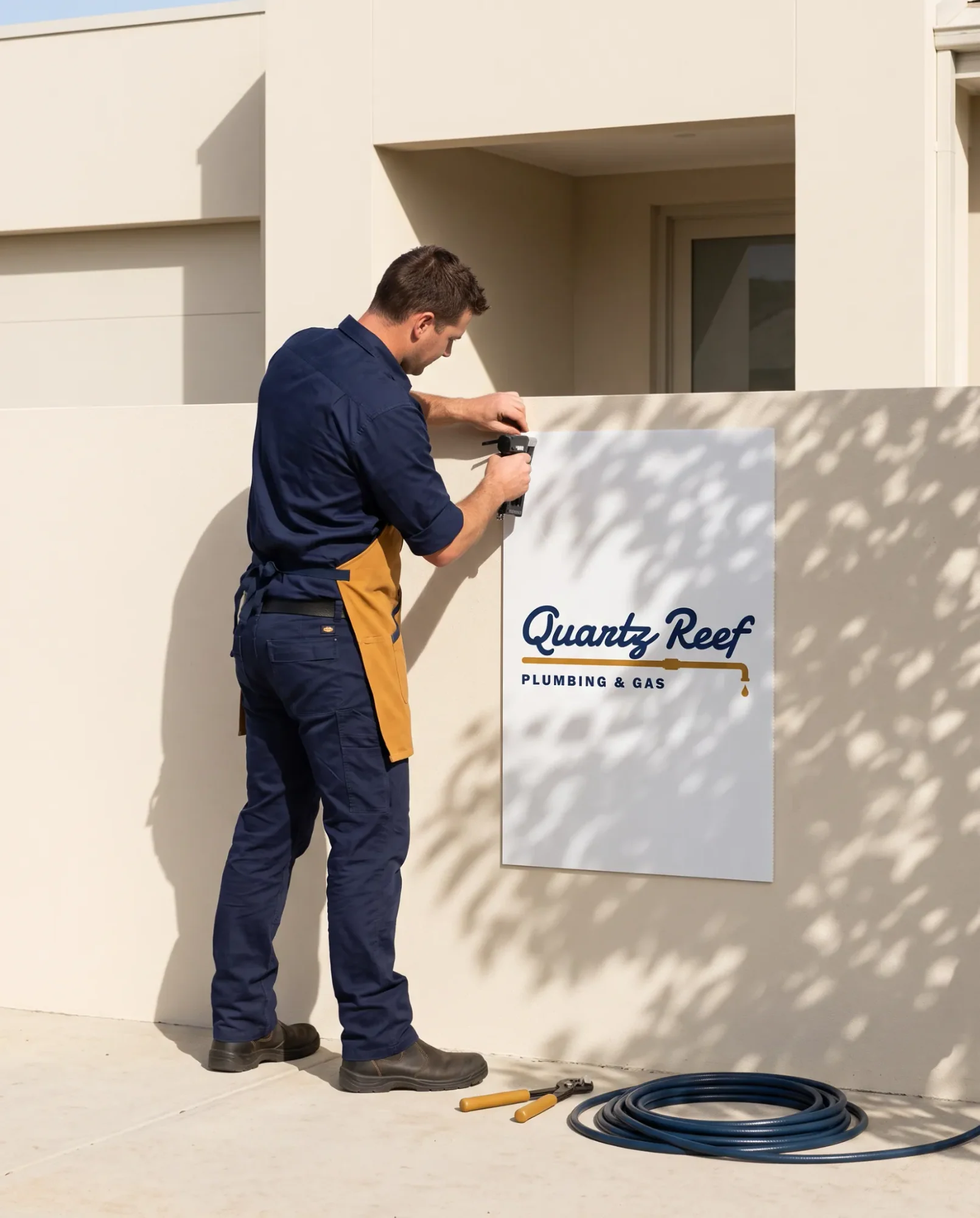
Think about walking into a cafe with a handwritten menu on butcher's paper, then one with a clean, properly printed menu. Or a tradie who turns up in a plain tee compared with one in a branded polo with the business name on it. The service might be identical. The perception is not.
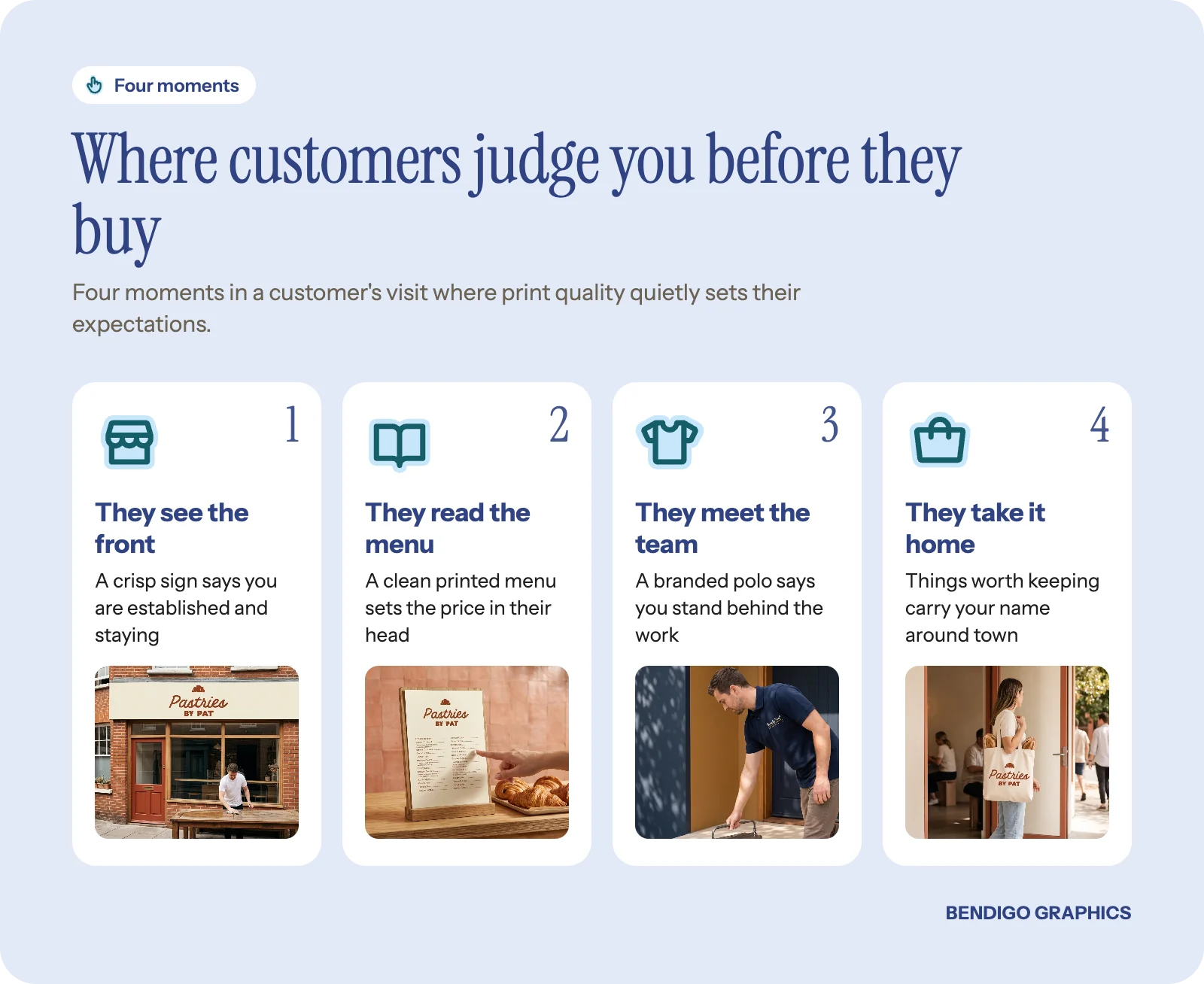
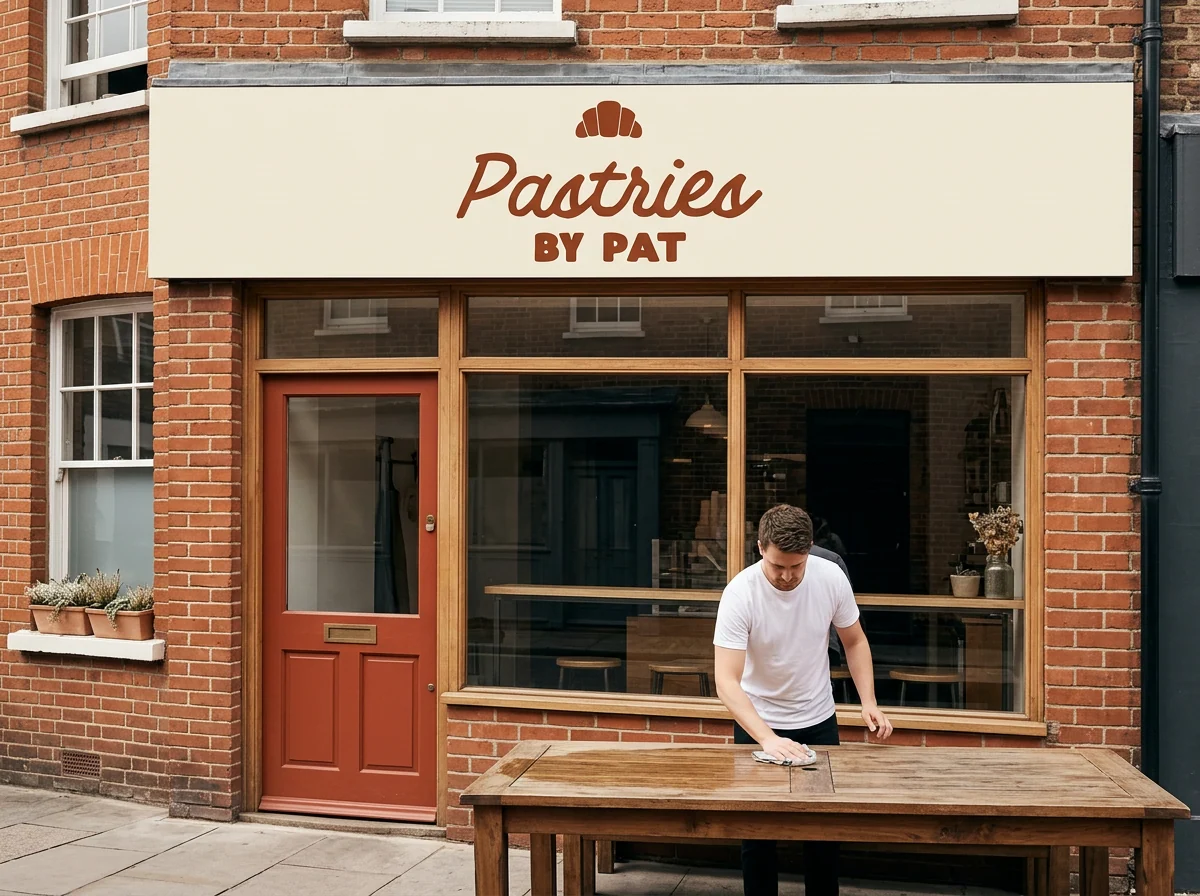
A business card on heavy stock tells someone you invest in your business. A crisp shopfront sign says you are established and plan to stick around. A branded uniform says you are accountable: your name is literally on your chest.
What are the benefits of quality printing?
Three show up again and again for small businesses:
People are more comfortable with your prices. Presentation shapes perceived value.
People trust you sooner. Consistent, well-made print reads as a business that pays attention.
People pass your name on. Things worth keeping get kept, used and shown to others.
Each of those is worth a closer look.
Print quality affects what people will pay
Luxury brands obsess over packaging for a reason: how a product is presented changes what it feels worth. The same applies at every scale. A bakery with printed boxes and branded sticker seals can charge more comfortably than one using plain white bags. A landscaper with clean vehicle signage and branded shirts can price with more confidence than one with a lone phone number on the door. The work might be the same quality, but the customer's confidence in paying for it is not.
It works in the other direction too. A peeling window decal says the business is struggling. A sun-bleached banner says someone stopped caring. Customers register these details without noticing, and act on them without thinking.
Quick tip: walk your own customer journey once a season, from the street sign to the receipt. Anything faded, peeling or out of date goes on the replace list first.
Consistency builds trust over time
When your colours, logo and tone match across everything a customer touches, from the sign and the card to the website, the shirts and the invoice, it creates a feeling of reliability. This business has its act together. If they care about this, they probably care about the work too.
Inconsistency does the opposite. Different logos on different materials, a website that does not match the signage, a card that looks nothing like the shopfront. None of these is a deal-breaker on its own, but together they create a quiet sense of disorganisation that wears away trust.
Good print creates word of mouth
People share physical things. A well-designed sticker ends up on a laptop, a water bottle or a car window. A good business card stays in a wallet. A branded tote bag gets carried around town. These are small, mobile ads carried by your customers.
Only if they are good enough to keep, though. Nobody sticks a boring sticker on their laptop, and nobody keeps a flimsy card. The quality of the object decides whether it gets used or binned. Invest in the materials and the design, and your customers will handle the distribution.
Where to start if the budget is small
You do not need to print everything at once, but whatever you print, make it good. One set of properly designed business cards on premium stock. One clean window sign. One branded shirt. Start with the things customers actually see and touch, and make them feel like they came from a business that knows what it is doing. Our guide to looking professional without spending a fortune has a practical starter list.
Good to know: the step from fine to good is usually a heavier stock, a better finish or a cleaner design, and it is often a smaller step than people expect. The difference in how customers see you is much bigger.
Common questions
Is premium print worth it for a small business?
For the pieces people hold or see every day, usually yes. A heavier card or a sharper sign costs a little more once and works on every customer who sees it. For short-lived print like a one-off flyer, standard stock is often fine.
What makes print look cheap?
Thin stock, low-resolution logos, faded colours, crowded layouts and designs that do not match the rest of the business. Most of these are fixed with better files and a better choice of material, not a bigger budget.
How often should I replace printed materials?
Whenever they fade, peel, go out of date or stop matching your brand. A seasonal walk-through catches most of it. Our guide to updating menus and signs covers the timing.
Start with the card in their hand: business cards are priced live on the product page. Compare stocks and finishes, upload your design, or have us create one that matches the rest of your brand.