Ask how much printing costs and the honest answer is: it depends. That sounds like a dodge, but the price of almost any print job comes down to a handful of choices you control, and once you know them you can price the job yourself.
Every product in our range has live pricing on its page, so rather than quoting numbers that go out of date, here is what moves the price of the things small businesses order most.
How much does printing cost for a small business?
Four things drive most of the difference between one quote and another:
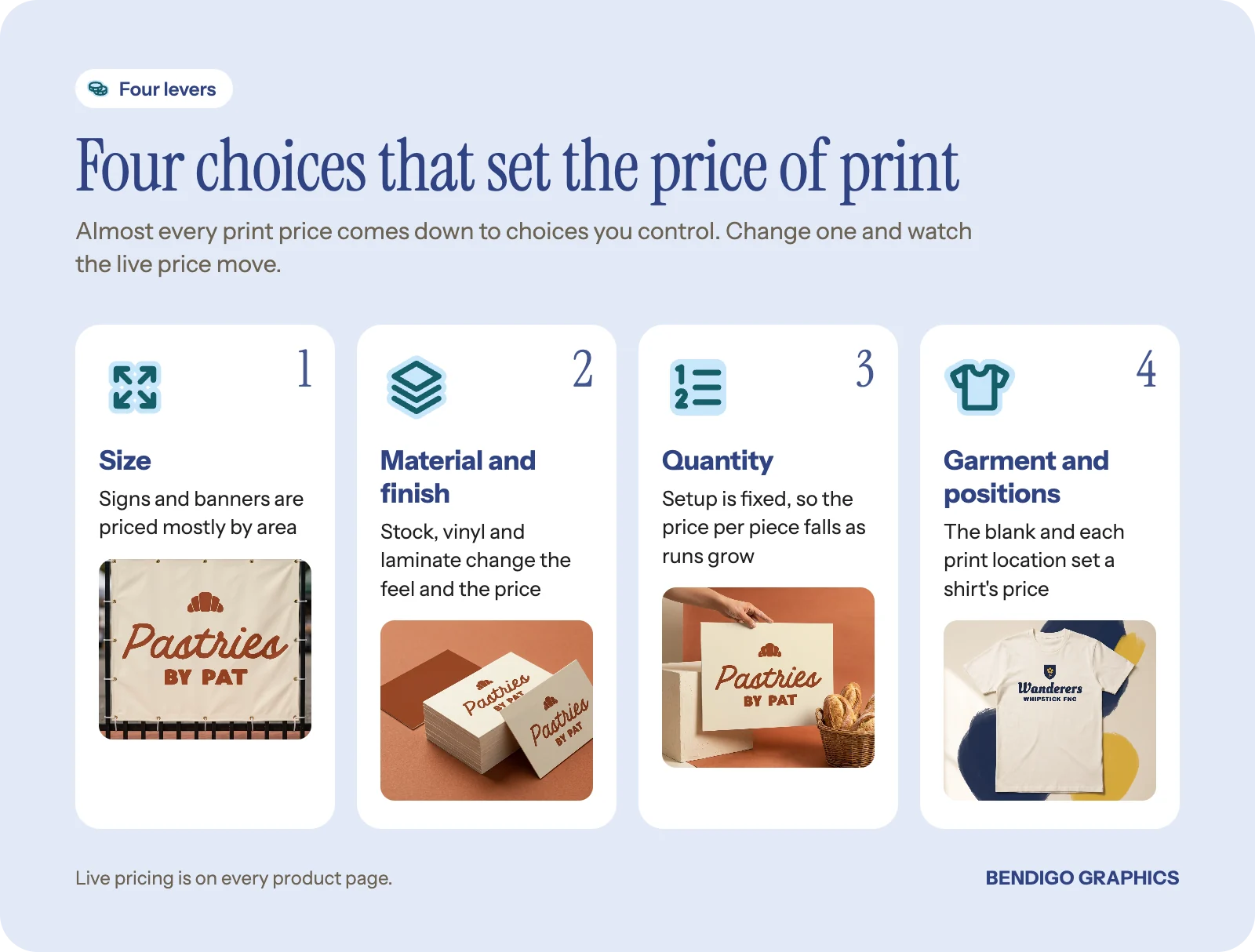
Size and material. Bigger and tougher costs more.
Quantity. The biggest lever on the price per piece.
Colours, finishes and complexity. Extra print positions, special finishes and complicated shapes all add up.
Design time. A print-ready file costs nothing extra; a design from scratch takes time.
Of these, quantity has the biggest effect. Setup (design, file preparation and getting the job ready for production) is much the same whether you order ten or a thousand, so it weighs heavily on small runs.
Quick tip: change one option at a time on a product page and watch the live price. It shows you straight away which choice is costing the most.
What drives the price of business cards?
For business cards, the cost comes down to quantity, stock and finish. A thick stock of around 400gsm with a matte or gloss laminate, printed double-sided in full colour, is a proper card rather than the flimsy kind that feels like a bookmark. Thick 400gsm cards are the easy upgrade.
Extras like special finishes and rounded corners, where a product offers them, add to the cost. They are nice touches, but not essential. The stock weight and laminate do most of the work.
Stickers: size, shape and quantity
With die-cut stickers, size, shape, material and quantity drive the price. Vinyl with a matte or gloss laminate is the durable default. The cost per sticker drops quickly as the quantity goes up, so a slightly bigger run often makes sense if you will use them.
Sticker sheets (kiss-cut, several designs on one sheet) cost a little more per sticker but give a peel-and-stick presentation that suits retail and gifting, and they are a good way to get variety at lower quantities.
Apparel: the blank sets the baseline
For a printed tee, three things set the price: the blank garment, the print method and how many print locations you want. A full colour DTF print in one location on a quality AS Colour blank like the Classic tee is a solid starting point for small runs, and the cost per shirt comes down as quantities rise.
Hoodies, polos and hi-vis cost more mainly because the garments do. The blank is the biggest variable, and you can feel the difference between a premium blank and a budget one straight away. For team orders, embroidery carries a one-off setup to turn your logo into a stitch file, after which reorders of a simple logo are good value.
Signs and banners: mostly area
Corflute signs, the lightweight boards you see at open homes and events, are one of the most affordable signs you can buy. Size and quantity drive the cost, and ordering several at once brings the price per board down.
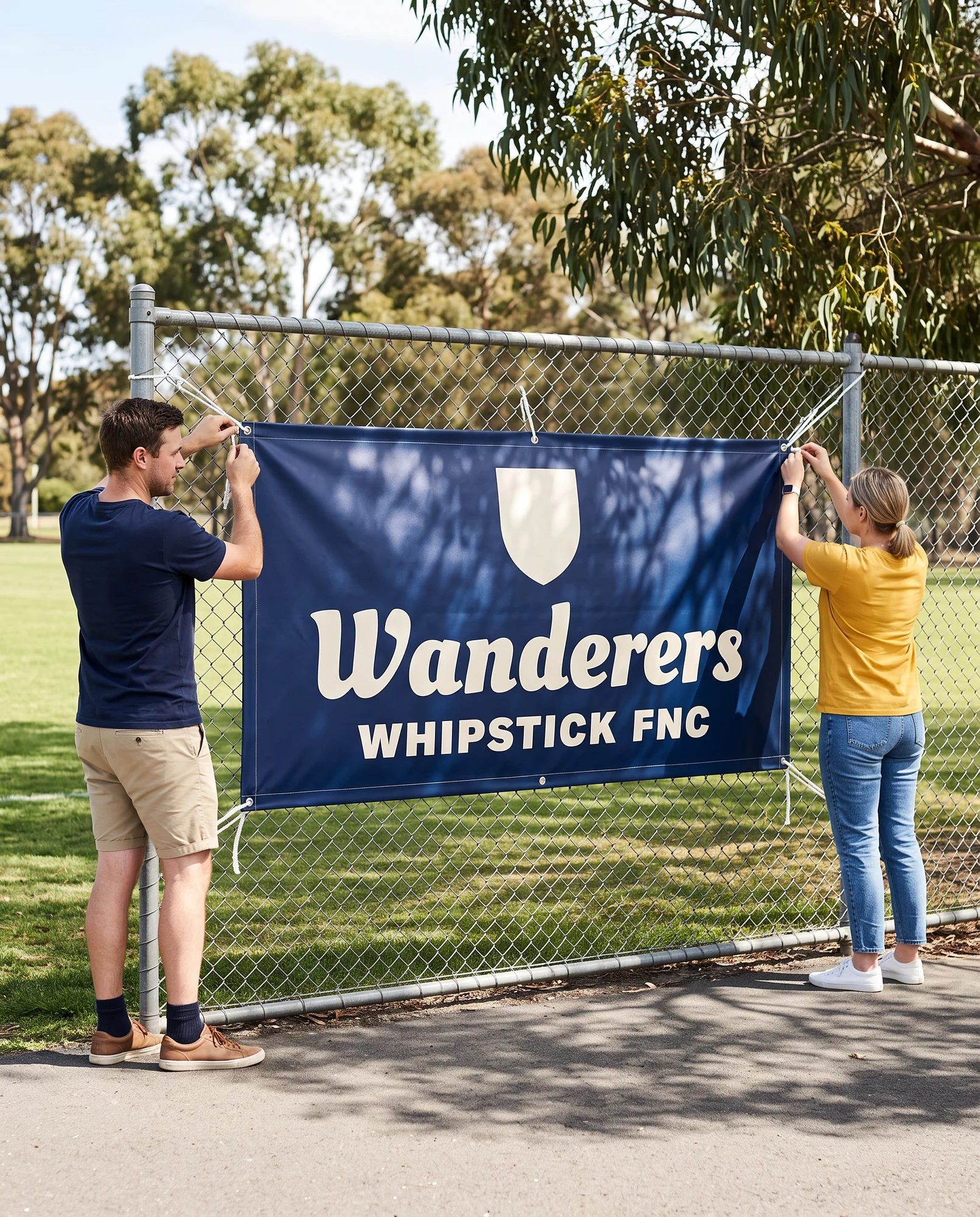
Vinyl banners are priced mainly by area, plus the material and finishing such as hemming and eyelets. Choose the size people need to read from their distance, not the biggest one that fits. Our guide to choosing a sign or banner size helps.
Window graphics depend on size, coverage and complexity. A simple door decal with your hours is a small job; a full shopfront graphic across several panes is a bigger one. You measure the glass and send us the sizes. Most window vinyl is easy to apply yourself, or with a sign installer you choose.
Before you order: measure each pane of glass yourself, width then height, and note any frames, handles or locks the graphic needs to clear.
How to keep printing affordable
Get your artwork print-ready once. Clean logo files can be reused on every order without paying for the same design work twice.
Order what you will use before details change. A reprint later beats a box of outdated cards.
Group similar jobs. Ordering several signs or shirts together spreads the setup.
Plan ahead. Leaving things to the last minute narrows your options. Each product page shows an estimated turnaround, and our guide to realistic printing timelines shows when to order.
If you are deciding where a first budget should go, read business cards, flyers or signs: where to spend first.
Common questions
Why is printing a small quantity more expensive per piece?
Because the setup is the same whatever the quantity. On a small run, that fixed cost is shared across fewer pieces, so each one costs more.
Does design cost extra?
If you supply a print-ready file, there is no design time to pay for. If you want us to design it, the time it takes is part of the cost, which is why simple, reusable artwork saves money over time.
Where can I see real prices?
On each product page. Choose your size, material and quantity and the price updates live, before you order anything.
See real numbers now: start with business cards. Change the quantity, stock and finish on the product page and watch the live price update.