Too small and nobody sees it. Too big and it overwhelms the space, or the budget. Most sizing problems come from guessing, and most of the guessing can be replaced with a tape measure and one simple rule.
This banner sizes guide covers that rule, the common sizes for signs, banners and pull-ups and where each works, plus how to check your choice before anything is made.
The viewing distance rule
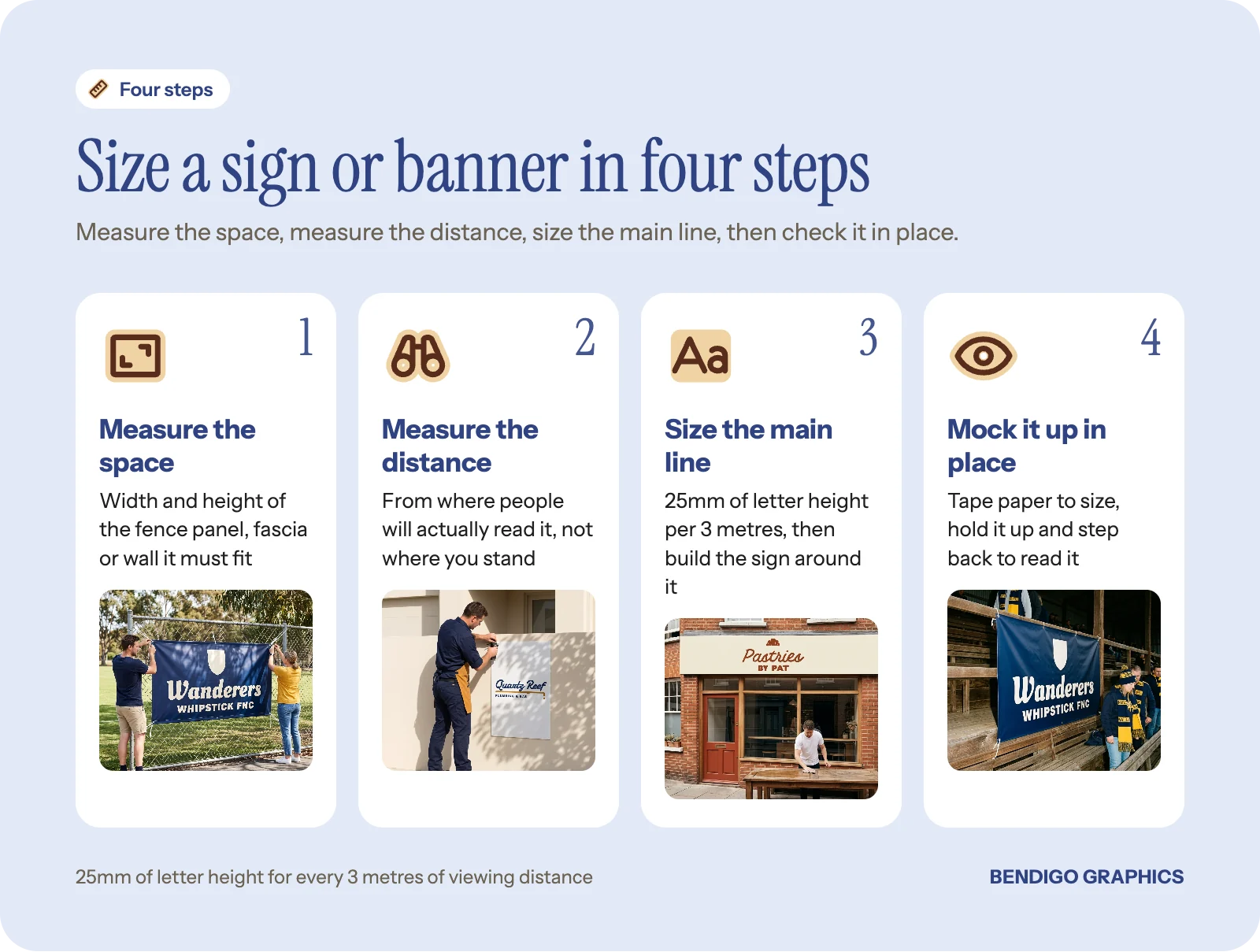
Every 3 metres of viewing distance needs roughly 25mm of letter height for comfortable reading. So if someone is 30 metres away, across a car park for example, your main text needs to be at least 250mm tall. At 60 metres, across a busy road, you need 500mm letters. A banner read from across a 15 metre oval needs letters of at least 125mm.
It is the most useful rule in signage because it tells you whether a sign is big enough before you order it. Measure from where people will actually see the sign, not from where you are standing when you put it up.
Rule of thumb: 25mm of letter height for every 3 metres of viewing distance. Work it out for your main line first, then size the sign around that line, not the other way round.
Common sign sizes and where they work
A3 to A2 (roughly 300mm to 600mm): counter signs, window notices and indoor wayfinding, read from 1 to 3 metres. Good for menu boards, desk signs and small retail displays.
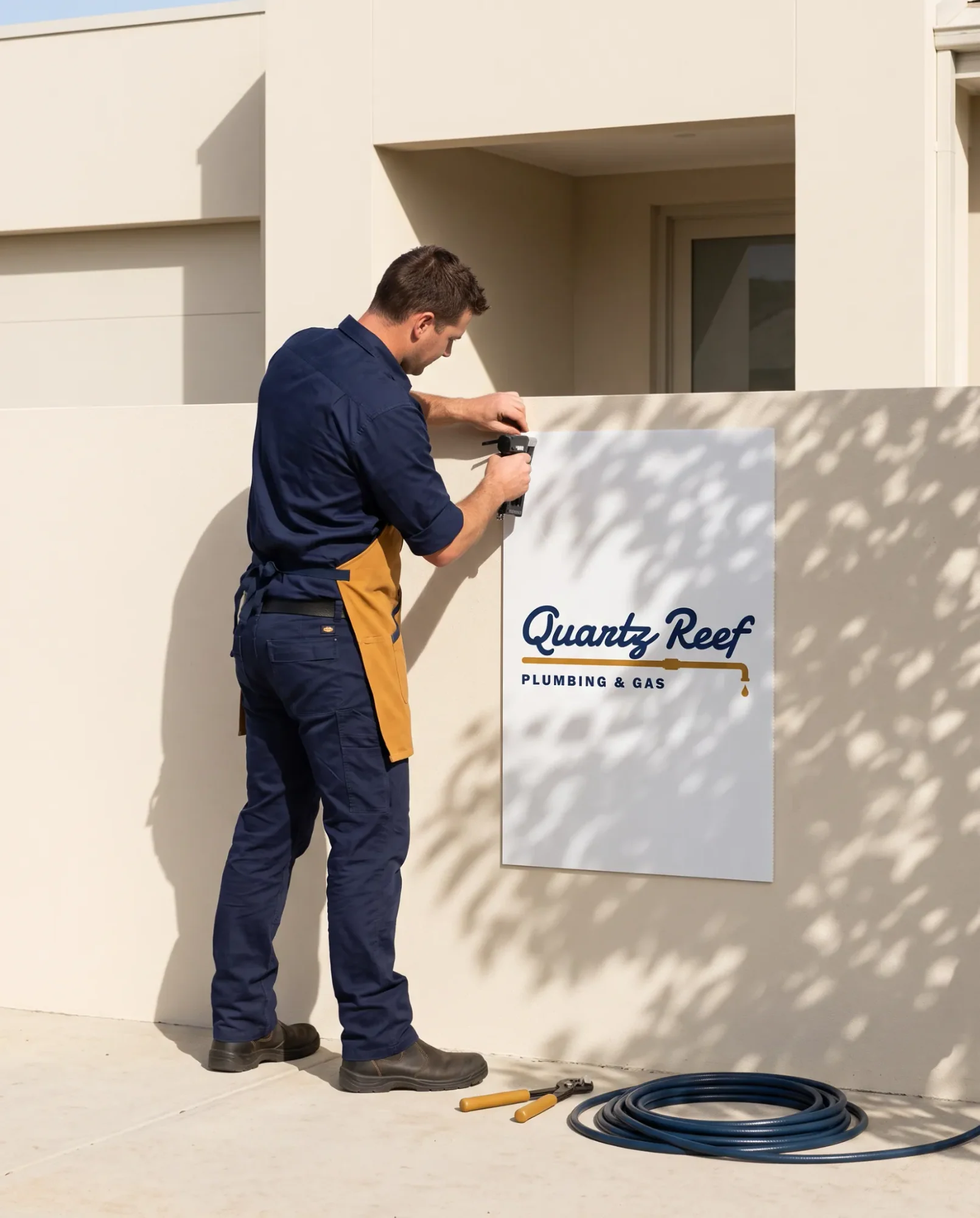
600mm x 900mm to 900mm x 1200mm: the usual corflute sign range. Readable from the footpath across a residential street. Works for real estate boards, site signs, event directions and garden-edge displays.
1200mm x 900mm to 2400mm x 1200mm: large boards for construction sites, business entrances and busy locations, readable from across a car park or a busy road. See large format signage.
Banner sizes guide: the common vinyl banner sizes
2000mm x 1000mm: the smallest standard banner with real impact. Works on fences, above doorways and on small shopfronts, for events, sales and short promotions.
3000mm x 1000mm: the most common size. It covers a good section of fence, sits comfortably above a shopfront and reads from across the street. The default for most businesses.
4000mm to 6000mm wide: for construction hoardings, sports fields, event perimeters and big shopfronts. Seen from a distance, so keep the message short and the text enormous.
All of these are vinyl banners with hemmed edges and eyelets. For banners people actually notice, the size is only half of it: short wording matters just as much.
What size banner for a fence, shopfront or hall?
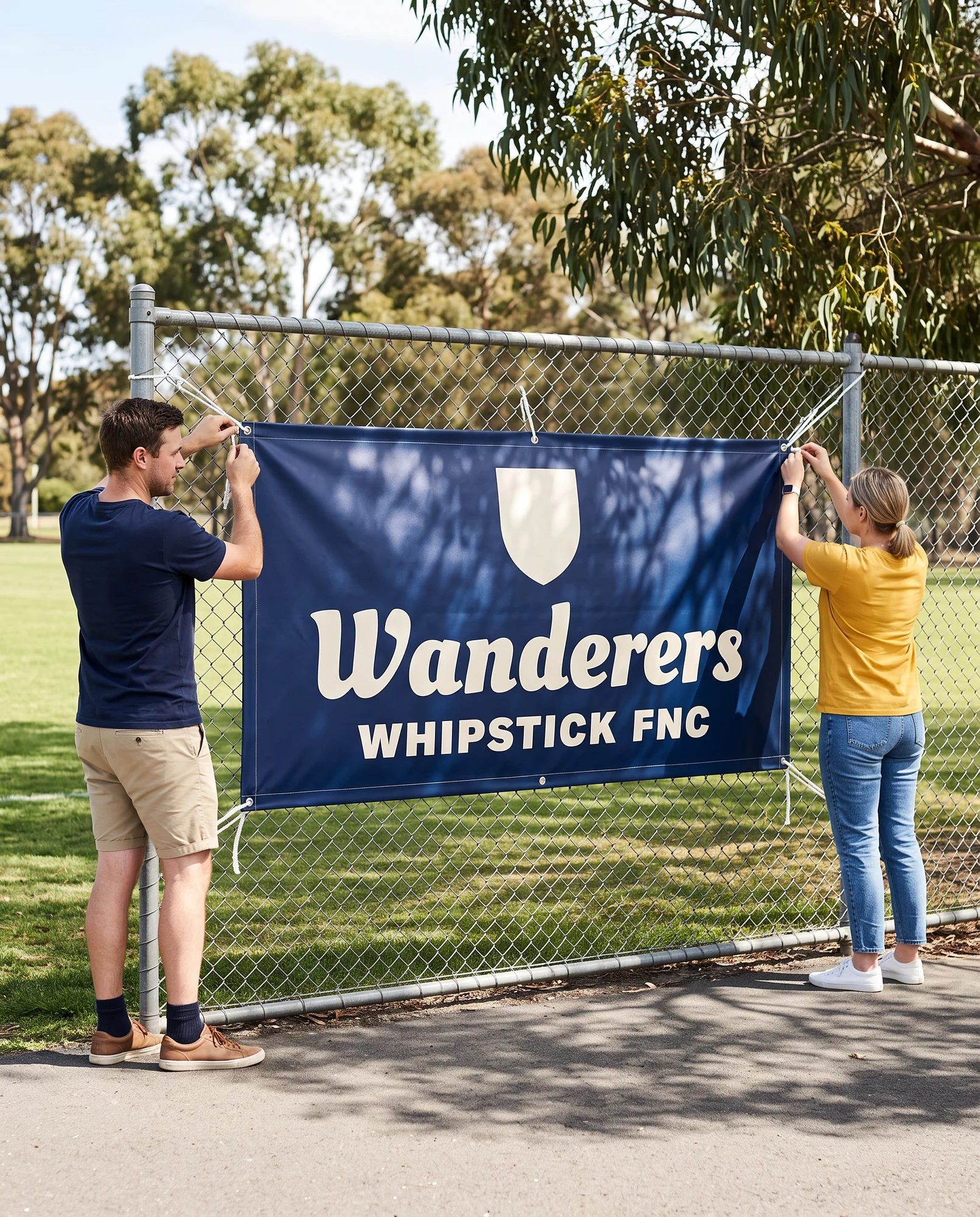
Fences. School fences, sporting grounds and construction hoardings. A 3000mm x 1000mm banner covers a comfortable section and reads from across the street. For longer runs go wider, or use several banners. On windy, open fences, a mesh banner lets the air through.
Before you order: measure the fence between the posts you will tie to, not the whole run, and leave a little room each side for the cable ties. A banner that fits the panel sits flat. One that overhangs the posts flaps.
Shopfronts and entrances. Above a door or across a window, 2000mm x 800mm to 3000mm x 1000mm is the usual range. Measure first: a banner too wide for the fascia or too tall for the window looks like an afterthought.
Halls and indoor venues. For halls, school gyms and indoor events, fabric banners are often better than vinyl. They hang without curling, do not reflect overhead lights and look more refined indoors. Size depends on ceiling height and viewing distance, and 2000mm x 1000mm is a comfortable starting point for most halls. There is more in vinyl vs fabric banners.
What size are pull-up banners?
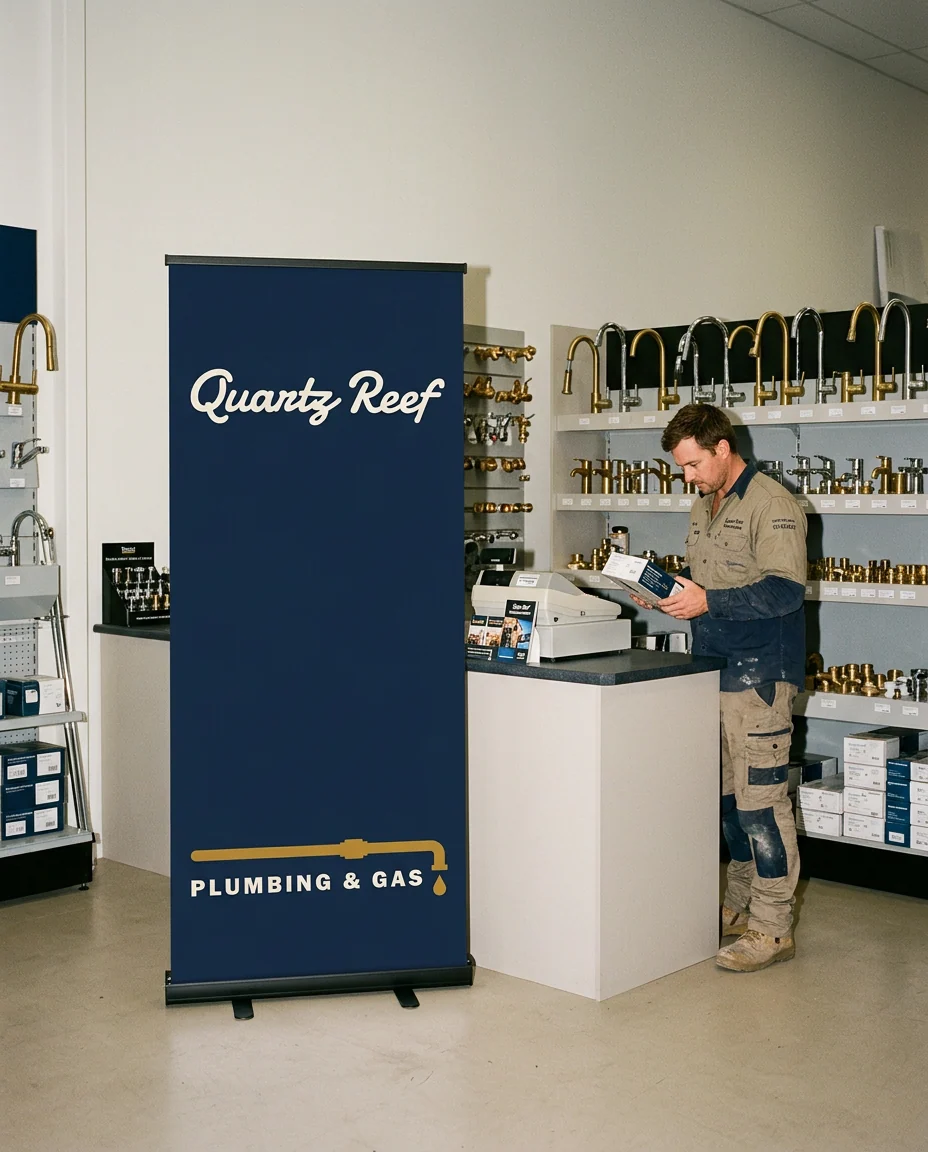
With pull-up banners the width is set at 850mm and you choose the height: 2000mm is the standard, 1500mm suits lower spaces, and there is a shorter version approved for shopping centres. The bigger choice is how many. One works for a simple message at a reception desk. Two or three make an instant display for an information night, expo or trade stand, and each packs into its carry bag. If you are weighing up portable options, read pull-up banners vs X banners.
The most common sizing mistake
Going too small. People consistently underestimate the size they need for the viewing distance. A sign that looks big leaning against your office wall can look tiny above a doorway.
Mock it up in place if you can. Tape some newspaper together at the right size and hold it where the sign will go. Step back to the real viewing distance. If you cannot read it clearly, go bigger or cut the words down.
Common questions
What is the most common banner size?
3000mm x 1000mm. It suits most fences and shopfronts and reads from across a street.
How big should the letters on my sign be?
Allow about 25mm of letter height for every 3 metres people will be reading from. At 30 metres that is 250mm for the main line.
What do you need from me to recommend a size?
The width and height of the space the sign or banner has to fit, a photo of the spot and roughly how far away people will be reading it from.
Can I pair a banner with flags at an event?
Yes. Rectangle flags at the gate and a banner on the fence make an event easy to find from the road.
Signs and banners are priced live on each product page: enter your size and quantity, then upload your artwork or ask us to design it. Browse the full range under signs and banners.