Choosing a material from a product list is guessing. The names sound alike, the numbers mean little until you have held the thing, and nobody wants to find out a banner creases badly after the first event.
This print materials guide describes what the common options actually feel like in your hands, so you can pick the right one without needing a sample first. If you would rather touch them, drop in to 2/176 Lyttleton Terrace, Bendigo, Monday to Friday, 10am to 4pm.
What do the paper stocks feel like?
Paper weight is measured in gsm, grams per square metre. Higher means thicker and stiffer, and the finish on top changes the feel as much as the weight does.
Uncoated card, around 300gsm: like a quality postcard. Smooth but not slippery. It absorbs a little ink, so colours look warmer and more muted. Lovely to write on. Good for cards, invitations and anything that benefits from a natural, tactile feel.
Thick card with a matte laminate: the premium business card feel. Rigid, with a soft, velvety surface that resists fingerprints. This is what people mean when they say they want a nice business card, and it is what thick 400gsm business cards are for.
Thick card with a gloss laminate: the same weight with a shiny, smooth surface. Colours pop more than on matte and catch the light. It feels polished and clean, but shows fingerprints more easily.
Our business cards page shows the stock and finish options, with live pricing as you choose.
Quick tip: if people will write on it, such as appointment cards, loyalty cards or gift vouchers, skip the gloss laminate. Pens smudge on it. Uncoated or matte takes ink much better.
What does sticker and decal vinyl feel like?
Vinyl comes in three broad grades, and the difference shows most on curves and outdoors.
Monomeric vinyl (short term): thin and flexible with a slightly plasticky feel. Fine for flat surfaces and indoor use. It is what most cheap stickers are made of, and it curls at the edges over time, especially outside.
Polymeric vinyl (medium term): a little thicker and more conformable. It handles gentle curves and outdoor conditions better, and it is the standard for most commercial stickers and decals.
Cast vinyl (long term): the premium option. Thinner than polymeric but more conformable, so it sits around curves, rivets and recesses without lifting. It feels smoother and more refined, and has the longest outdoor life of the three. It is the choice for decals on curved vehicle panels and long-term exterior signs.
Our die-cut stickers are printed on commercial vinyl with UV inks and a laminate for outdoor use. If you are choosing a sticker format as well, see die-cut, kiss-cut, sheets or rolls.
What do banner materials feel like?
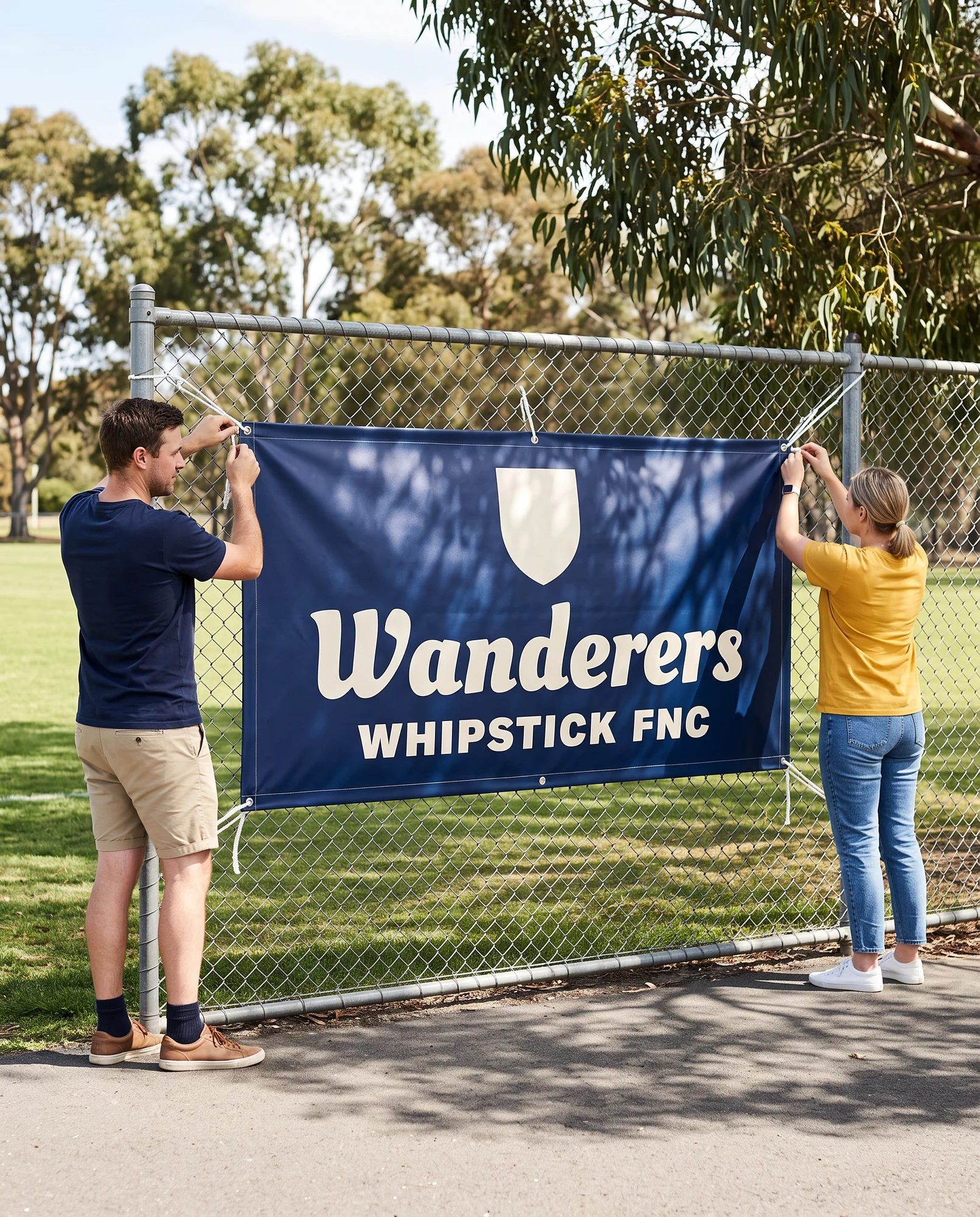
PVC banner vinyl (440gsm): heavy, smooth and slightly stiff, like a thick tarpaulin. The standard outdoor banner. Durable, but folds leave crease lines that never fully drop out. Our vinyl banners are made this way, with hemmed edges and eyelets.
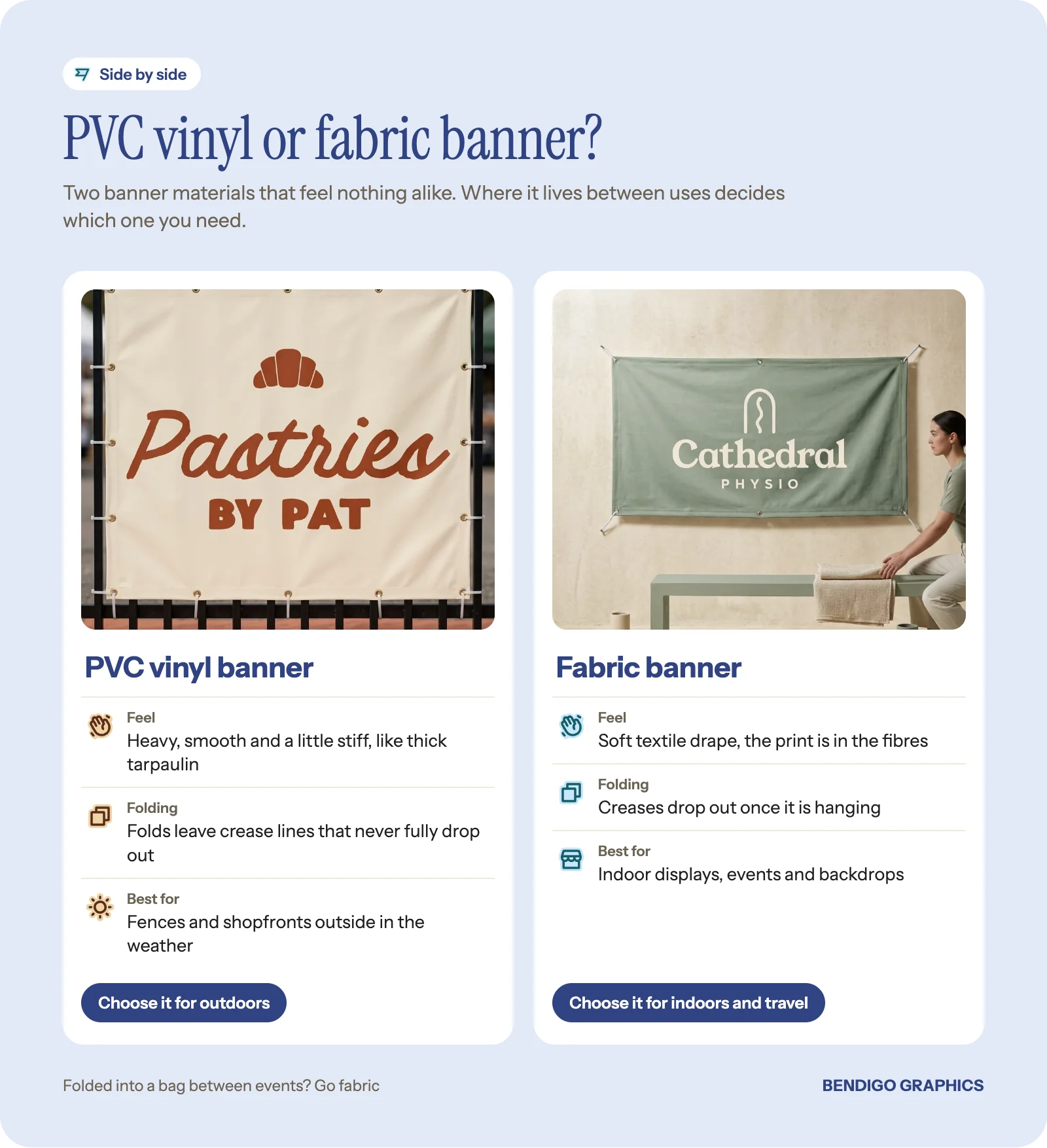
Economy fabric (120gsm): lightweight polyester with a soft textile drape. The print is dye-sublimated into the fibres, so the surface feels like fabric rather than plastic. Creases from folding drop out after hanging. Best for indoor displays and events.
Premium fabric (270gsm): heavier polyester with more body and richer colour. It hangs straighter than the economy option and feels closer to a curtain than a flag. Best for retail and long-term indoor displays. Both weights are on the fabric banners page.
There is a full comparison in vinyl banners vs fabric banners.
Rule of thumb: if the banner gets folded into a bag between events, go fabric. If it stays rolled or hangs outside in the weather, go PVC.
What does corflute feel like?
Corflute is corrugated plastic board: like stiff corrugated cardboard, but waterproof and much lighter than it looks.
Thinner 3mm board: light and slightly flexible. Fine for indoor signs and short-term outdoor use, but it bends in strong wind.
5mm board: the same material, more rigid. The standard for site signs, real estate boards and event signage. It holds its shape and feels more substantial.
Our corflute signs are 5mm, single or double sided. Why corflute works as budget signage covers where it shines.
Print materials guide: choose by where it will live
The fastest way to the right material is to describe the job rather than the product:
Indoors or outdoors? Sun and rain rule out plain paper and short-term vinyl.
Handled or hung? Anything handled all day wants a laminate or a heavier stock.
Flat or curved? Curves and rivets need a conformable vinyl.
Moved often? Folded and carried points to fabric. Rolled or left in place suits PVC.
For how long? A weekend event and a five-year shopfront need very different materials.
Tell us those five things when you order and our team can point you to the right option.
Common questions
What is the difference between matte and gloss?
Matte feels soft and hides fingerprints, and colours look calmer. Gloss is shiny, makes colours pop and shows fingerprints. Matte is easier to write on.
What does gsm mean?
Grams per square metre. It is a measure of weight, and a higher number usually means a thicker, stiffer sheet.
Can I see materials before I order?
Yes. Drop in to 2/176 Lyttleton Terrace, Bendigo, Monday to Friday between 10am and 4pm, and we will help you choose.
Browse the whole range under print, where every product page shows its material options and live pricing.