Vinyl and fabric banners both put a message on a wall, a fence or a display stand. The difference is how they behave once they are up: in the rain, under shop lights, folded in the boot between events. Pick the wrong one and you either overspend or end up with something that does not suit the space.
Here is how the two compare, a quick decision guide, and the one question that settles the vinyl vs fabric banner choice nearly every time.
Vinyl banners: the outdoor standard
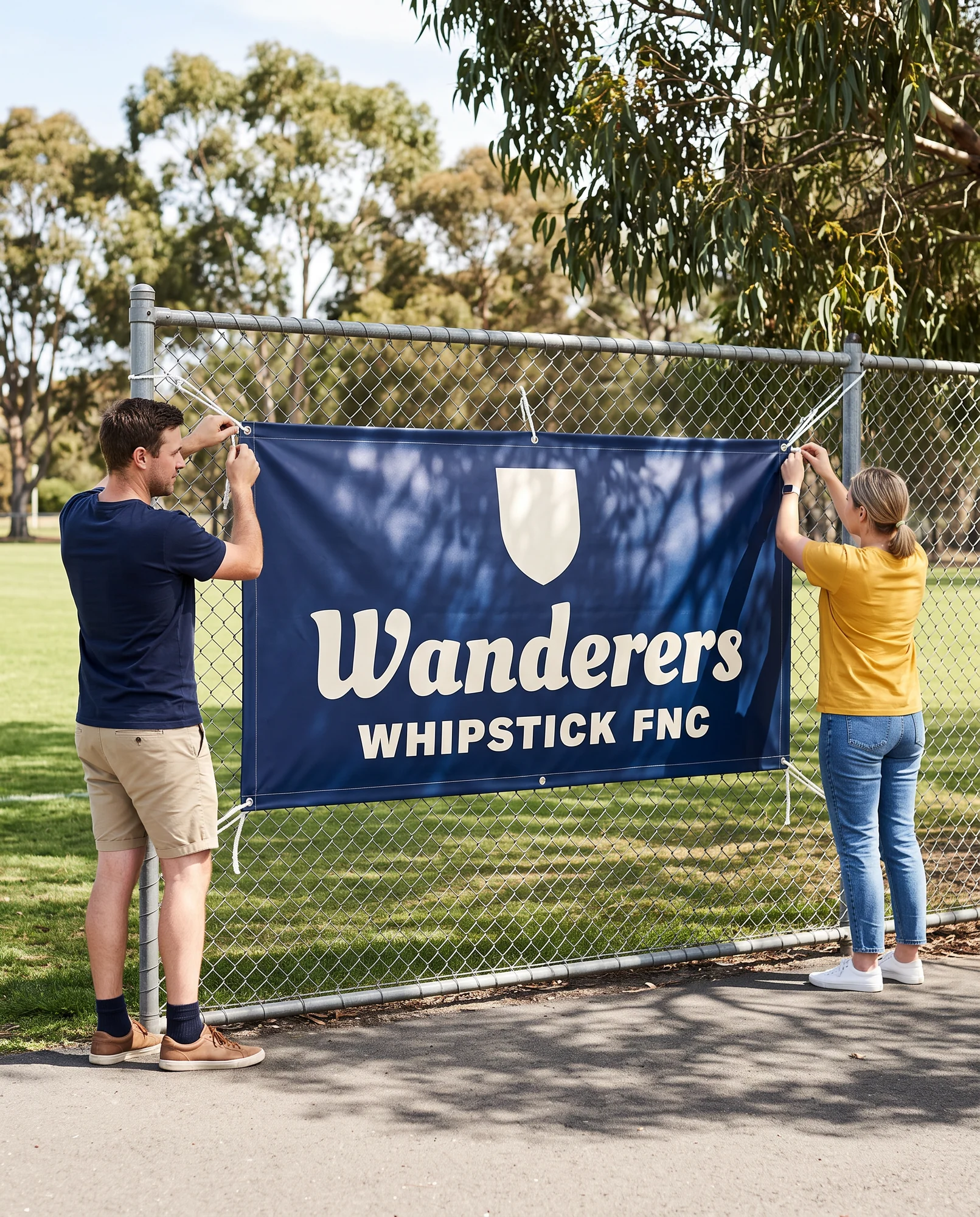
Vinyl banners are printed on 440gsm PVC banner material with UV-stable inks. They are tough, waterproof and made to handle wind, rain and direct sun, which makes them the default for fence banners, building-site hoardings, event perimeters, shopfront promotions and anything that has to survive the elements.
They are finished with hemmed edges and eyelets for cable ties or rope, hang flat and resist tearing at the edges. You can have them single sided on white blockout material, or double sided with graphics on both faces.
The trade-offs: vinyl has a slight sheen under lights, which makes it less ideal for close-up indoor displays, and it creases when folded. Those fold marks never fully drop out.
Quick tip: to transport or store a vinyl banner, roll it printed side out around a tube rather than folding it.
Fabric banners: the indoor choice
Fabric banners are printed on polyester by dye-sublimation, where the ink bonds into the fibres rather than sitting on top. The result looks and feels like fabric, not plastic. They drape naturally, have no sheen and carry a richness of colour indoors that vinyl cannot match.

There are two weights. Economy 120gsm is a lightweight knitted polyester that suits events, temporary displays and banners that hang freely. Premium 270gsm is a heavier woven fabric with more body and colour depth. It hangs straighter and looks sharper up close, which suits permanent retail and hospitality displays.
Fabric banners come with hemmed edges and eyelets as standard, or rod pockets for hanging from a pole or dowel. They fold for travel, and creases hang or steam out when you set up.
The trade-off: fabric is not waterproof and fades faster outdoors. Use it indoors or somewhere fully sheltered.
Vinyl and fabric banners at a glance
Three materials, three different jobs.
| Compared | Vinyl | Economy fabric | Premium fabric |
|---|---|---|---|
| Material | 440gsm PVC | 120gsm knitted polyester | 270gsm woven polyester |
| Weatherproof | Yes, waterproof and UV-stable | No, keep it sheltered | No, keep it sheltered |
| Under shop lights | Slight sheen | No sheen | No sheen, richer colour |
| Travel and storage | Roll it, folds crease | Folds, creases steam out | Folds, creases steam out |
| Hanging | Hems and eyelets | Eyelets or rod pockets | Eyelets or rod pockets |
Vinyl vs fabric banner: a quick decision guide
Outdoors, exposed to weather: vinyl, every time.
Indoors, permanent display: premium fabric.
Indoors, temporary or event: economy fabric.
Outdoors under cover (an awning or verandah): vinyl if rain or wind can reach it, fabric if it is fully sheltered.
Trade shows and portable displays: fabric with a display frame, or pull up banners if you need something freestanding.
Rule of thumb: if rain or wind can reach it, choose vinyl. If it is fully sheltered and people will see it up close, choose fabric.
Which banner suits your space?
Answer three questions and we will point you to the right material.
See every answer
Vinyl banner. Waterproof 440gsm PVC with UV-stable inks, hemmed edges and eyelets. The outdoor standard for fences, events and shopfronts.
Mesh banner. Perforated so the wind passes through, taking the pressure off long runs of fencing while the print stays readable from the street.
Economy fabric banner. Lightweight 120gsm polyester for indoor events and temporary displays. It folds for travel and creases hang or steam out.
Premium fabric banner. Heavier 270gsm woven fabric that hangs straighter and looks sharper up close. Suits permanent retail and hospitality displays.
What about windy fences and scaffolding?
A solid banner on a long run of temporary fencing acts like a sail. For building sites, sports grounds and exposed fences, mesh banners are perforated so the wind passes through, taking the pressure off the fence while the print stays readable from the street.
What size banner do you need?
Measure the space you want to fill, and the fence panel or wall it will hang on, then send us the width and height. Both vinyl and fabric banners are made to custom sizes. If you are not sure how big to go, our guide to what size sign or banner you need works it out from viewing distance, and banners Bendigo locals notice covers wording and placement.
Before you order: keep the words big and few. A banner is read from a distance and usually in passing, so your name, one message and one way to reach you is plenty.
Still not sure? Browse our signs and banners or tell us where the banner will live and we will recommend the right material. For events and shopfronts, a rectangle flag beside your banner catches the eye from further down the street.