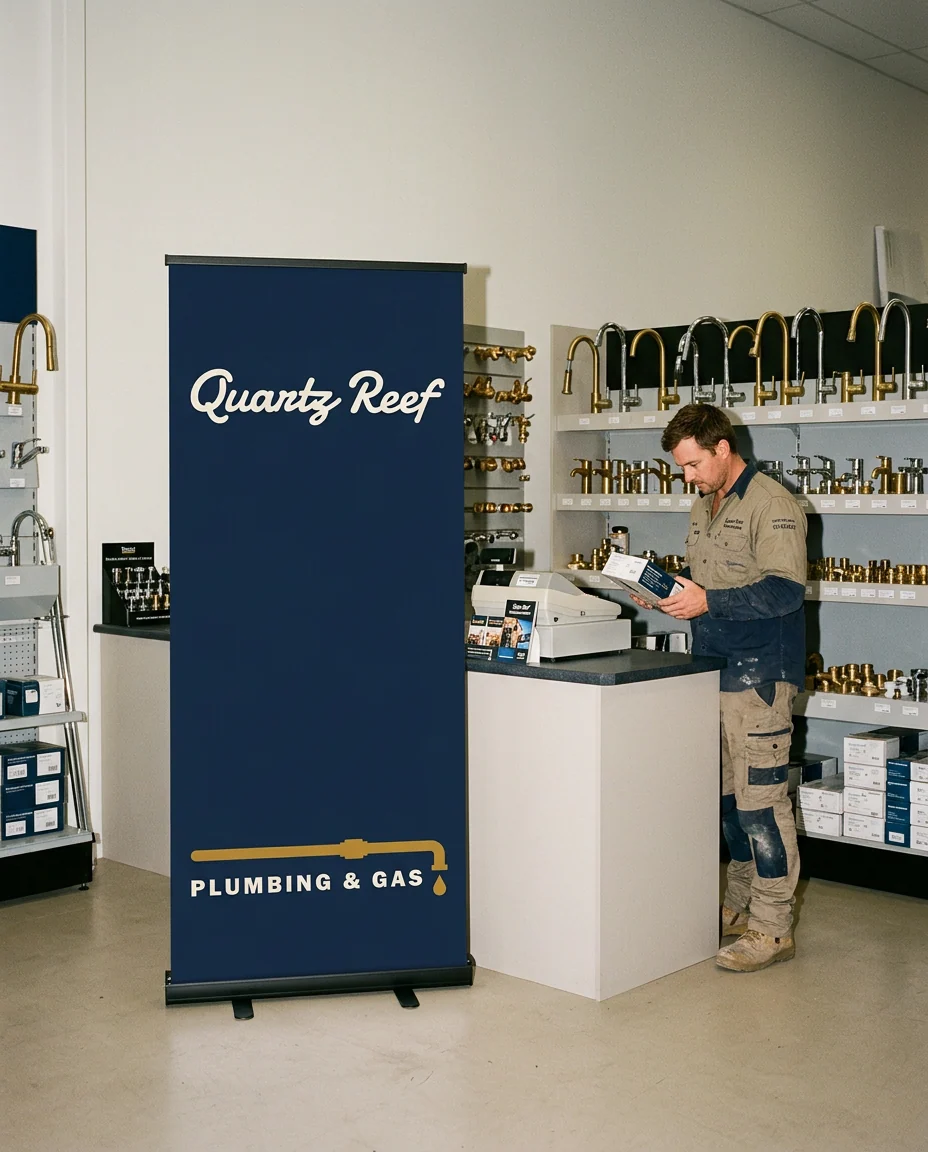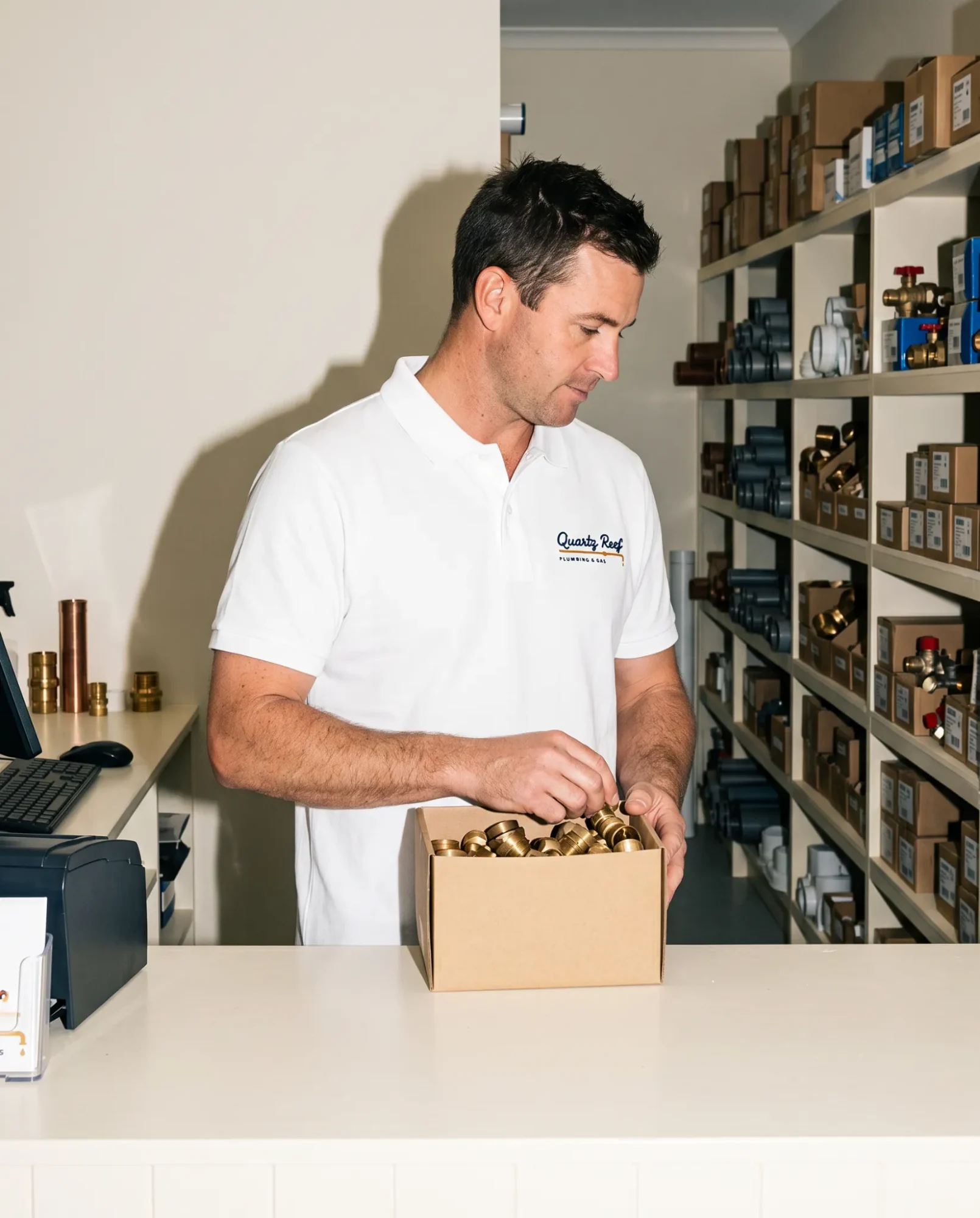
Workwear takes a beating normal clothing never sees. UV, concrete dust, chemical splashes, sweat and a wash almost every day. If you spend your days on the tools, your shirt is basically your mobile office, and your logo goes everywhere you go.
So the question with printed workwear in Bendigo is not only how cheap you can get it. It is what the shirt says about your business after twenty washes and a few rough jobs. Here is what holds up, what does not, and where it is worth spending.
What cheap workwear looks like after a few months
Cheap workwear looks fine on day one. Everyone has new shirts on, you grab a photo and it feels like a win. The difference shows up later.
Prints crack or flake after a handful of washes.
Dark shirts fade and a once-sharp logo goes cloudy.
Fabric twists, collars curl and the shirt drifts into yard-shirt territory rather than something you wear in front of a client.
From a distance that reads as cutting corners. Not dramatically, but in the quiet way that sticks. If your shirt looks tired, clients start to wonder what else is. Our piece on why your workwear does more marketing than you think goes into this.
Printed workwear: which methods hold up on site?
Every decoration method has a job it suits. Here is how the common ones behave under site conditions.
DTF transfers. A printed film is heat pressed onto the garment and bonds to the fabric. It handles normal washing well and is durable for office, retail, hospitality and light trade use. It gives you full colour, fine detail and no screen setup, so it suits small teams and designs that change. Our full colour garment prints are made this way. Where it can fall short is extreme conditions: constant industrial chemicals, abrasive dust or hot commercial washing and tumble drying can shorten its life. Read more in DTF printing explained.
Screen print. Ink is pushed through a mesh screen into the fibres, and the print softens with wear rather than cracking. It copes with repeated heavy washing and abrasion very well. The trade-off is setup: every colour needs its own screen, so it only makes sense at larger quantities of the same design.
Embroidery. Thread does not fade in the sun the way ink can, and it will not crack or peel. A stitched chest logo often outlasts the garment. It suits polos, jackets and caps with a bold, simple logo, and it reads as established. Fine text, gradients and photos do not translate to thread.
Cut vinyl heat transfer. Letters or shapes cut from coloured vinyl and pressed on. It is handy for individual names and numbers, but edges can lift with repeated washing, especially on textured fabric. Use it for personalisation rather than as the main branding.
Hi-vis needs a little extra care
On branded hi-vis, keep logos and names off the reflective tape. Tell us which standard your site requires and we will place the decoration so the garment stays compliant. Our guide to hi-vis, polos or tees helps you pick the right garment for each part of the crew.
What about the garment itself?
The blank matters as much as the print. A quality garment in the right fabric weight will outlast a cheap one whatever the decoration.
Cotton is comfortable but absorbs moisture and stains.
Polyester is tough and dries fast, but can feel hot.
Cotton-poly blends usually give the best balance for site work.
Weight matters too. A heavier tee is not automatically better, but it generally lasts longer. Comfort counts as much as toughness: fabrics that breathe and cuts that move when you bend, lift and climb get worn. Uniforms nobody likes end up crumpled in the back of a cupboard. We use AS Colour blanks, such as the pique polo in a 240gsm textured knit that hides wear, and long sleeve work shirts for sun and paddock work.
Where does the money really go?
On paper, cheap shirts win. Over time the maths changes. If cheaper shirts need replacing every year because they fade, twist or look too rough to wear in front of clients, you pay again and again. If staff quietly stop wearing them because they are uncomfortable, you have paid for uniforms that never leave the house.
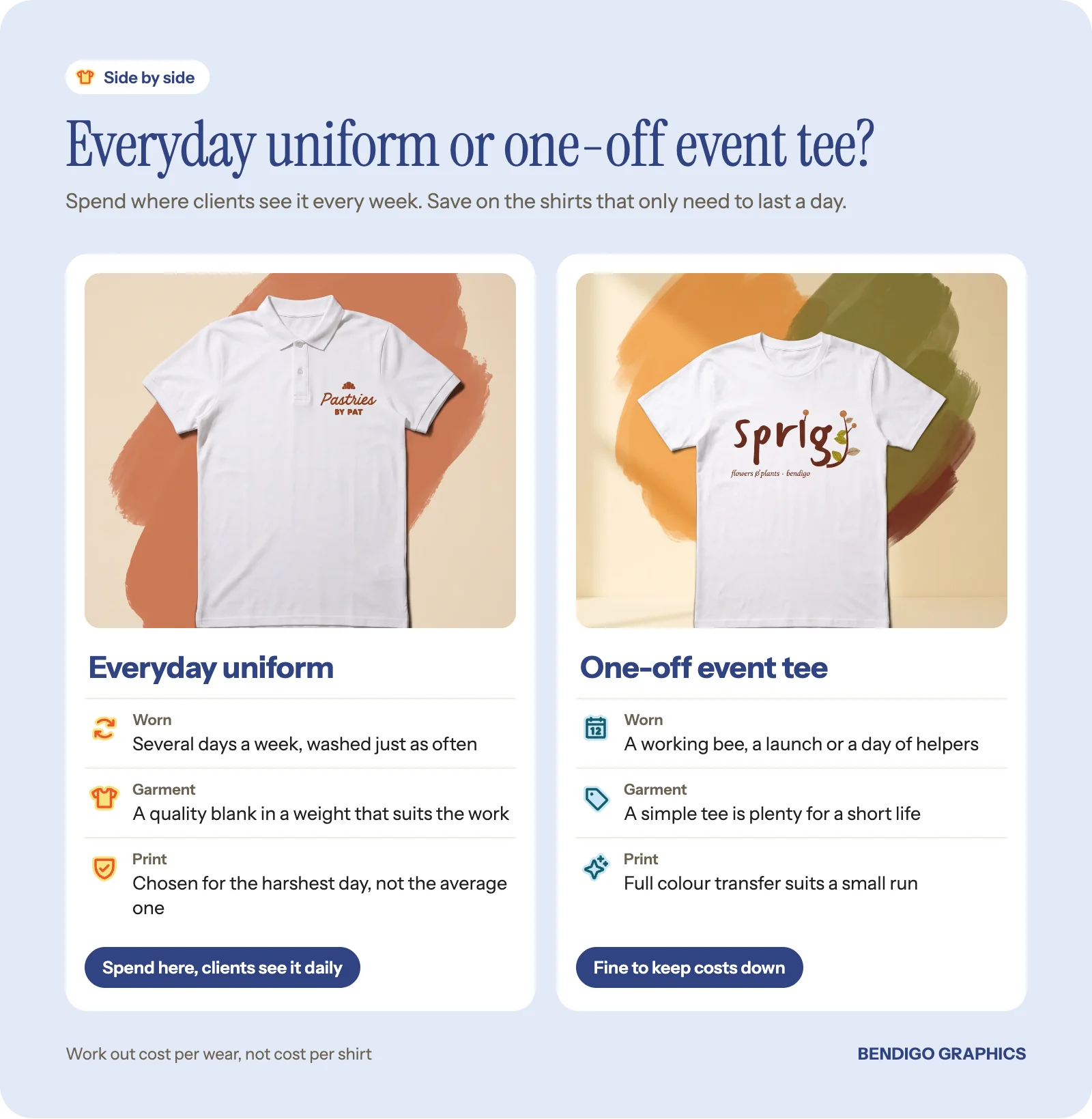
A decent shirt with the right print can last several seasons before you think about replacing it, so the cost per wear drops fast and you spend less time organising reorders. Quality rarely means top shelf on everything. It usually means a step or two up from the cheapest option, in a fabric that suits the work, with a print chosen for durability.
Rule of thumb: choose the decoration for the harshest thing the shirt will go through, not the average day. If one crew works in concrete dust and another in the office, it is fine to decorate them differently.
When is it fine to go cheaper?
Short-term promo tees for a one-off event, extra tops for helpers who are only there a day or two, and vests that go over the real uniform for compliance all justify keeping costs down. A simple staple tee with a full colour print does that job well. Just be honest about which category a garment belongs in: everyday uniform, or short-term promo. For the gear clients see every time you arrive, cheap usually costs more in reputation and replacements than it saves.
How to choose workwear without overthinking it
How often will it be worn and washed? Several times a week points to better fabric and print.
Where will it be worn? Indoors, in sun and rain, in a dusty shed? Tell us, because it changes what we recommend.
How long should it last? At least a couple of seasons points to sturdier options.
Bring an old shirt that failed, whether the print cracked, the colour faded or the fabric pilled. We can look at it and suggest how to avoid that next time. Matching shirts, hoodies and jackets, paired with tidy vehicle branding, makes a crew look organised rather than thrown together.
Before you order: talk to your crew about washing. Cold washes, turning shirts inside out and skipping the dryer add a lot of life to any print.
Common questions
How long does printed workwear last?
It depends on the garment, the print method and how it is washed. A quality blank with a print suited to the conditions, washed cold and inside out, lasts far longer than a cheap shirt washed hot and tumble dried.
Is DTF good enough for tradies?
For normal wear and home washing, yes. It holds up well and suits small crews and changing designs. For constant chemical exposure or hot commercial laundering, talk to us about the conditions first.
Can I order a few shirts at a time?
Yes. Small runs are welcome, and keeping your artwork on file means top-ups match the first order.
Can you put logos on hi-vis?
Yes, as long as the decoration stays off the reflective tape. Tell us the standard your site needs when you order.
See the full range of branded apparel and workwear, or start with the pique polo: it is priced live on its page, so you can compare colours and quantities and upload your logo.