Too few and you are reordering in a month. Too many and you have a box of shirts in sizes nobody wears sitting in the back room. Working out how many shirts to order for a team is mostly simple maths, plus a little care with sizes.
Here is the formula we use for team apparel orders, whether you are kitting out a crew of three or a whole workplace.
How many shirts to order per person
If your team wears branded shirts every workday, they need enough to rotate through a week.
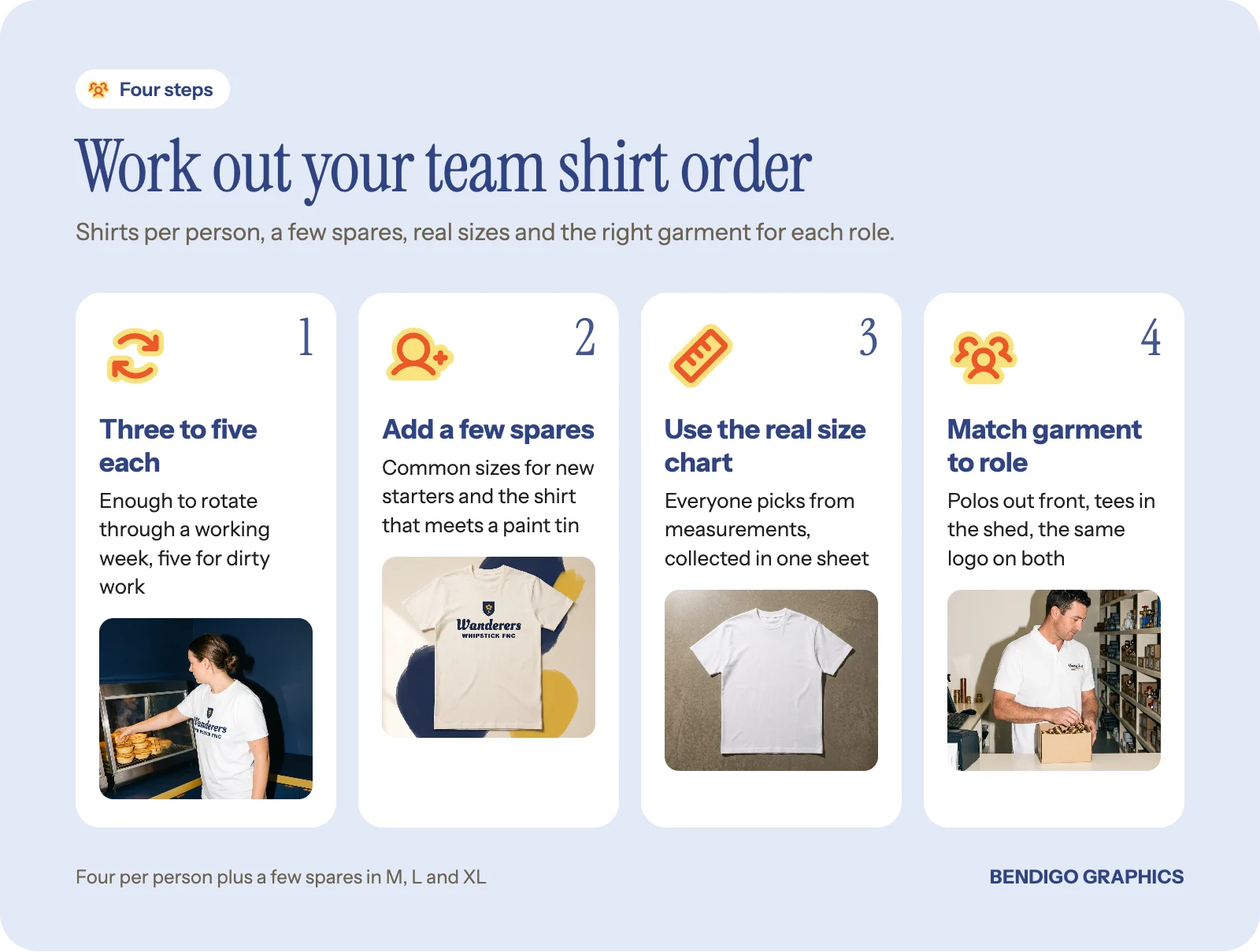
Three is the bare minimum: one on, two in the wash.
Four is the sweet spot for most teams.
Five is comfortable and allows for laundry delays.
For trades and physical work, lean towards five. Shirts get dirty faster and take more punishment. For office or retail wear, three to four is usually enough. If staff only wear them a couple of days a week, or only at events, two or three each will do.
Add spares for new starters and replacements
Order two or three extra shirts in the common sizes, usually M, L and XL. They cover new starters without a separate order and replace damaged shirts straight away. Nothing looks worse than one person in a faded, cracked print from years ago while everyone else looks fresh.
Rule of thumb: four shirts per person, plus a few spares in M, L and XL. It covers a working week, a new starter and the odd shirt that meets a paint tin.
A quick order summary by team size
Team of 5 wearing shirts daily: 20 to 25 shirts, plus 3 spares.
Team of 10: 40 to 50 shirts, plus 5 spares.
Bigger teams: scale the same way.
Plan on replacing workwear every year or so, and office wear less often. How long a print lasts depends on the garment, the print method and how it is washed. Our guide on workwear printing that lasts on site explains what holds up.
Collect sizes properly
Do not guess sizes, and do not ask people to self-report without a size chart. Sizing varies between brands and styles, so use the chart for the exact garment you are ordering. It is on the product page, or we can send it through. Share it with the team and have everyone choose from their measurements, not what they usually buy.
The common mistakes are people ordering their usual medium when the garment runs small, or going too large because they are used to relaxed fits. The five minutes it takes to check the chart saves the hassle of swaps and reprints. A heavy tee and a classic tee can fit quite differently, so check the one you are actually buying.
Before you order: collect everyone's name, garment and size in one spreadsheet against the real size chart, and have one person sign it off. Most sizing mix-ups come from answers scattered across text messages.
How to handle different roles
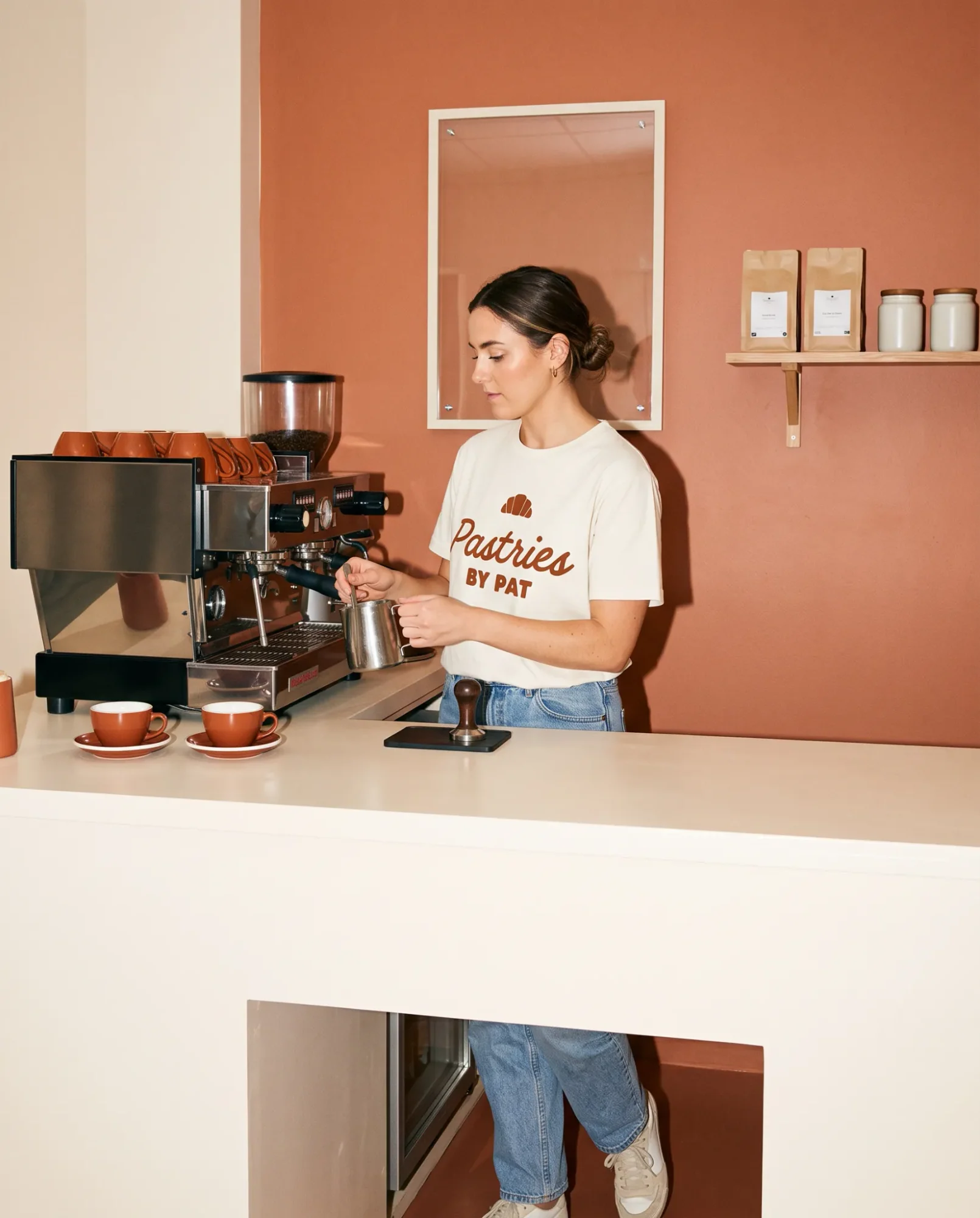
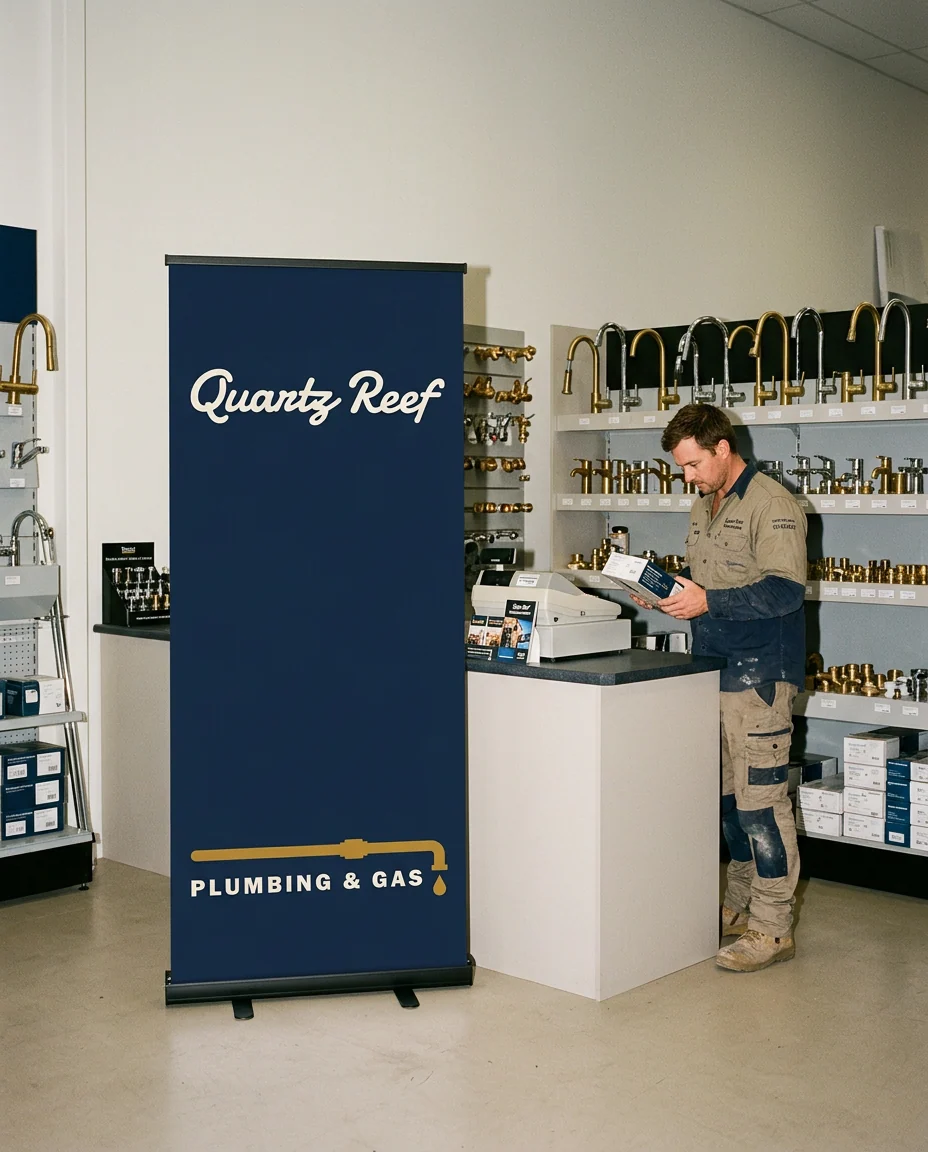
If different roles suit different garments, such as polos for client-facing staff and tees for the warehouse, order them as separate items but keep the branding consistent: same logo, same colours, same placement. The garment can change while the brand stays unified.
Front of house and client visits: a pique polo looks sharp and hides wear.
Warehouse, shed and events: a staple tee is comfortable and easy to replace.
Paddock and sun: long sleeve work shirts.
Sites and roads: branded hi-vis with the logo kept off the reflective tape.
For help choosing between them, see hi-vis, polos or tees for your crew.
Should you order everything at once?
Not necessarily. Full colour prints made with DTF transfers suit small runs, so topping up later is practical rather than painful. Ordering the core quantity now and adding new starters as they arrive often beats guessing a year ahead. Keeping your artwork on file means top-ups match the first run. For a club or group order with lots of sizes and names, how to order club shirts without losing your weekend has a step-by-step approach.
Common questions
How many work shirts does each employee need?
Four is right for most teams wearing shirts every workday. Go to five for dirty, physical work and three for light office wear.
What sizes should the spare shirts be?
The common sizes, usually M, L and XL. Check your own team's size list, though, as some crews skew larger or smaller.
Can we add more shirts later?
Yes. Small runs are welcome and your artwork stays on file, so a top-up for a new starter matches the rest of the team.
Does ordering more change the price?
Quantity is one of the things that affects price. Each product page shows live pricing, so you can see how different quantities compare before you order.
Send us your team size and roles and we will recommend the right quantity and garments. Or browse team apparel, with tees, polos, work shirts and hi-vis each priced live on its product page.